Toddler Chewing the Crib Rail: Molars, Covers and What Helps
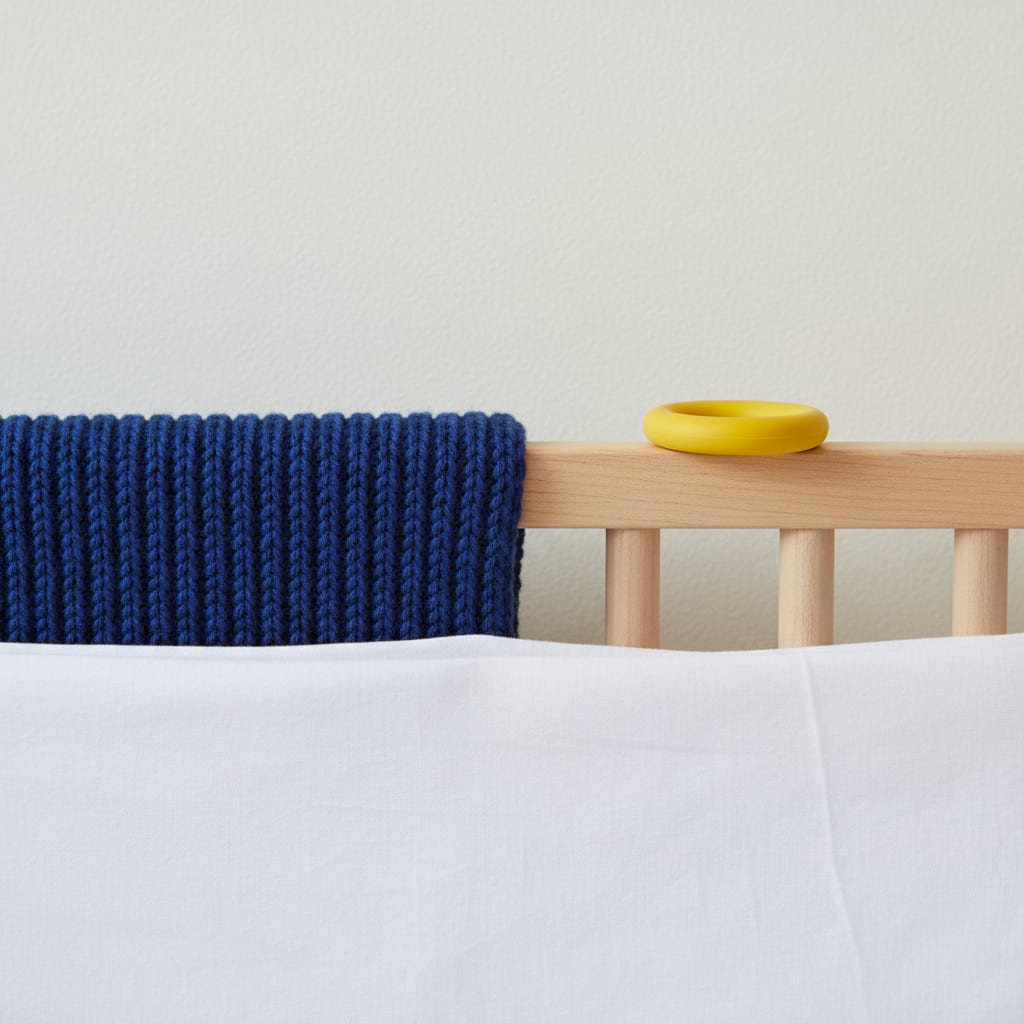
A toddler gnawing the crib rail at bedtime is most often teething, and in the second and third year that usually means molars. The NHS lists “gnawing and chewing on things a lot” and “not sleeping very well” among the signs of a tooth coming through. Some children keep chewing the rail as a settling habit after the tooth is in. What helps: soothe the gums during the wind-down instead of in the crib, fit a snug cover to the top rail, check the crib’s finish for chipped paint, and skip the teething gels and necklaces the FDA warns about.
Why the crib rail, and why at bedtime
A standing toddler’s mouth is level with the top rail, and the rail is hard, smooth and always there. HealthyChildren.org describes the urge plainly: “Teething babies love to put toys, fingers and other objects in their mouths and bite down on them.” In a dark crib the rail is the only firm thing in reach.
Bedtime makes it worse. The day’s distractions are gone, the child is tired, and with nothing else going on a sore gum gets all their attention. So a toddler who barely chews during the day may stand at the rail and work on it for a good while before sleep.
The molar timeline
The back teeth arrive well after the front ones, which is why rail-chewing often starts or returns after the first birthday. The NHS gives a rough order:
| Teeth | Typical arrival (NHS) |
|---|---|
| First molars (back teeth) | around 12 months |
| Canines (pointed teeth) | around 18 months |
| Second molars | around 24 months |
The NHS adds that “most children will have all their milk teeth by the time they are 2 to 3 years old,” and the FDA puts the total at 20 baby teeth by age three. So a toddler can be teething, on and off, for most of the time they sleep in a crib.
Teething or habit?
Teething comes with company. The NHS lists a sore, red gum where the tooth is coming through, more dribbling than usual, a flushed cheek, ear rubbing and more fretfulness. It also tends to run a few lumpy nights around one tooth rather than weeks on end. The regression-or-something-else guide sets teething against a regression side by side if you are unsure which you have.
A habit looks different. The chewing is calm and rhythmic, it happens every night at the same point, and there are no other signs in the mouth. Some toddlers simply like the feeling of chewing, the same urge behind the teething and sensory bite. If the noise you hear is a grating or squeaking with the mouth closed rather than chewing on the rail, that is grinding, which is a different thing and is covered in the teeth grinding at night entry.
Check the rail itself
Look at the crib before you look at remedies. Two things matter:
- The finish. HealthyChildren.org warns that on older cribs “the finish may include old layers of lead-based paint.” On a hand-me-down or antique crib with painted rails, a toddler who chews them is chewing that finish. If paint has chipped where your child chews, stop the chewing on that rail now and ask your pediatrician whether a lead test makes sense.
- The rail’s own protection. HealthyChildren notes that “some railings are covered by a special plastic to prevent teething babies from gnawing on the paint or wood.” If your crib has a strip like this, check it for cracks or loose edges. A split strip has small pieces that can come away.
Rail covers: what to look for
A rail cover wraps the top rail so the teeth meet fabric or soft plastic instead of wood or paint. If you use one, it should be:
- On the top rail only. A cover wraps the rail. It is not padding for the sides. Crib bumpers are a different product, and HealthyChildren says “there is no evidence that bumper pads can prevent serious injuries, and they pose a risk of suffocation, strangulation, or entrapment.” It also notes older babies can use bumpers to climb out.
- Snug, with nothing hanging into the crib. The cover should sit tight around the rail, with fastenings that do not leave long ties or loops inside the sleep space.
- Checked often. Toddlers with new molars can chew through fabric or tear a soft plastic edge. Look at the cover every few days, and take it off if your child has made a hole or loosened a piece. Loose pieces are something a toddler can put in their mouth.
A cover protects the rail. It does nothing for the sore gum, so pair it with the bedtime changes below.
What helps at bedtime
- Soothe the gums before the crib. The FDA and the AAP both point to rubbing the gums gently with a clean finger, or giving “a firm (not liquid-filled) teether made of rubber to chew on.” The NHS says a teething ring can be cooled in the fridge, but never put in the freezer, because a frozen ring can damage the gums. A teether shaped to reach the back of the mouth, like the Nuby NanaNubs gum massager, suits molars.
- Keep the teether out of the crib. The FDA says to supervise children so they don’t choke on a teething ring. Use it during the wind-down, then brush teeth and put it away.
- Keep the routine the same. A teething night is a reason for a little extra comfort, not a new routine. Keep the steps of your toddler bedtime routine in the same order, and answer night waking briefly.
- Ask about pain relief for the bad nights. If a tooth is clearly hurting, ask your pediatrician or pharmacist whether a children’s pain reliever makes sense and at what dose. Don’t guess at a dose from the box.
Betteroo has a guide to how teething can tangle with sleep that covers the night-waking side in more depth.

What to skip
- Numbing gels and liquids. The FDA says topical medicines containing benzocaine or lidocaine “offer little to no benefit and are associated with serious risks when used for teething pain in children.” Benzocaine can cause methemoglobinemia, a serious condition that reduces the blood’s ability to carry oxygen.
- Homeopathic teething tablets. The FDA groups these with the risky topical products, and the NHS does not recommend homeopathic products for teething.
- Teething necklaces and bracelets. HealthyChildren says necklaces “made of amber, wood, marble or silicone pose serious risks for choking and strangulation,” and the FDA has received reports of deaths and serious injuries linked to teething jewelry. Nothing goes around a sleeping child’s neck or wrist.
- Anything frozen solid. HealthyChildren advises against letting a child chew “directly on anything that’s frozen solid.”
When to call the pediatrician
HealthyChildren says that “teething does not cause fever, diarrhea or excess crying,” so a fever should be checked on its own terms rather than put down to a tooth. Call your pediatrician if your toddler:
- is crying more, and more often, than teething would explain
- has diarrhea that lasts more than a day
- has chewed paint off an older crib
- has a chipped tooth, bleeding gums or swelling that doesn’t settle
This is general information, not medical advice. It’s a starting point for that conversation.
FAQ: toddler chewing the crib rail
Is it bad for my toddler to chew the crib rail?
On a modern crib with an intact finish, the main risks are splinters and damage to the crib. On an older painted crib, the paint may contain lead, so stop the chewing and ask your pediatrician. A snug top-rail cover protects both the rail and the teeth.
Are crib rail covers safe for toddlers?
A cover that wraps the top rail tightly, with no ties or loops hanging into the crib, is a different product from a bumper. Check it every few days and take it off if your child has chewed a hole in it.
Why does my toddler only chew the rail at night?
The crib has nothing else to chew, the child is tired, and with the day’s distractions gone a sore gum gets all their attention. Soothing the gums during the wind-down usually cuts the chewing down.
See also: nearby entries
18 Month Sleep Regression: Signs, Causes & What to Do
July 17, 2026
15 Month Old Milestones: What Most Toddlers Do
July 31, 2026
Toddler at Your Bedside at 5am: The Silent Escape
August 23, 2026