Toddler Won't Stay in Bed? 9 Fixes That Actually Work
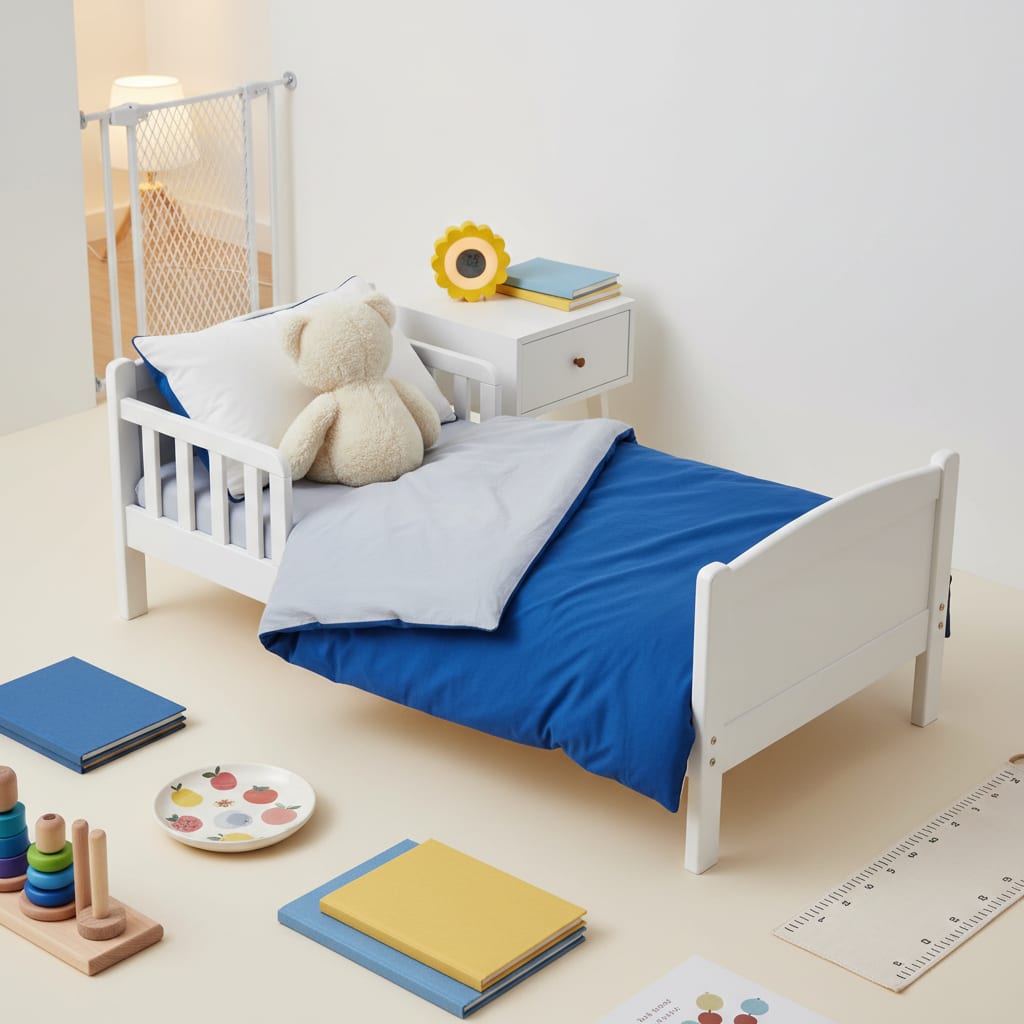
When a toddler won’t stay in bed, the fix is almost never a clever gadget — it’s a boring, repeatable system: one clear rule, a predictable bedtime routine, a bedtime that actually matches their sleep needs, and the “silent return” (walk them back every single time, calmly, with zero conversation). Most families who run that system consistently see the curtain calls collapse within a week or two. The other common culprit: the big-kid bed arrived before the impulse control did. Here’s the whole playbook, in the order I’d try it.
Why toddlers get out of bed
A crib is architecture; a bed is a suggestion. The day your toddler gets a bed — or learns to scale the crib — staying in it becomes a choice, and toddlers are developmentally wired to test choices. Add a two-to-three-year-old’s genuine fear of missing out, a dash of separation anxiety, and the delightful discovery that appearing in the living room gets a huge reaction, and you have the nightly parade. None of this is defiance in the adult sense. It’s a skills gap: the wanting-to-stay part of the brain is years behind the getting-up part.
First, rule out a schedule problem
Before treating this as a behavior issue, check the timing, because no consistency system can beat a bedtime that’s wrong:
- Bedtime too early? A toddler put down under-tired has thirty minutes of energy to spend and will happily spend it in your hallway. Compare your day against a realistic 2 year old schedule — especially the gap between nap end and bedtime.
- Nap too long or too late? Late-afternoon naps quietly steal bedtime pressure.
- Bedtime too late? Overtired toddlers get wired, not sleepy, and fight harder.
If the sudden bed-escaping arrived alongside night waking and clinginess in a younger toddler, you may be looking at a development wobble rather than a habit — see the 18 month sleep regression entry for that pattern. In a just-turned-two, the 2-year regression produces the same picture.
The 9 fixes, in the order I’d try them
- Tighten the bedtime routine. Same steps, same order, ending in the bed — and give the routine a clear final beat (“last hug, last song, lights out”) so “done” is unambiguous.
- State one rule, once. “After lights out, you stay in your bed until morning.” Say it at a neutral time, not mid-battle. Toddlers follow rules they can recite.
- Run the silent return. Every time they appear: take their hand, walk them back, tuck them in, leave. No lecture, no cuddle upgrade, no snack negotiations — the same three seconds of nothing, whether it’s trip two or trip twelve. The first nights are a workout; the whole method lives or dies on it being boring.
- Try a bedtime pass. One card, good for one acceptable trip (a hug, a bathroom visit, one question). Used, it’s surrendered; unused, it can buy a small morning reward. It gives the autonomy-hungry toddler a legal move, which drains the fun out of the illegal ones.
- Schedule the check-ins yourself. “I’ll come check on you in five minutes” — then actually do it, before they come find you. Flips the dynamic from chasing to trusting.
- Add an ok-to-wake clock like the LittleHippo Mella for the early-morning version of the problem. When the light is on, morning has officially started; until then, bed. It works because it makes the rule visible and takes you out of the argument.
- Make the room win-proof. If they do stay up, the room should be dull and safe: no screens, minimal toys in reach, furniture anchored. A boring room is your silent partner.
- Practice and praise in daylight. Play the “staying in bed” game at 4pm, run a pretend bedtime with stuffed animals, and pour attention on the mornings after a good night. Toddlers repeat what earns attention.
- Re-audit after a week. If nothing has budged, the timing is usually still off, or the returns are quietly turning into conversations. Fix the leak, not the method.
Field note: consistency between adults matters as much as consistency between nights. If one parent runs silent returns and the other runs snuggle amnesty, your toddler will simply learn the schedule of who’s on duty.
When the bed itself is the problem
If the escaping started the week the crib left: the move probably came too soon. There is no prize for early graduation — many toddlers genuinely aren’t ready for the freedom of a bed until sometime around age three (Betteroo’s toddler-bed timing guide is a good second reference on the call). If your child is under three, still fits the crib, and wasn’t climbing out, it is completely fine to reinstall it and try again in a few months. If they were climbing out, treat that as a safety decision: a sleep sack, a lowered mattress, or the move to a floor-level bed with a gated doorway are all reasonable answers. A gate at the bedroom door (a tall walk-through one like the Regalo Easy Step Extra Tall), by the way, beats a locked door every time — it keeps the room safely contained while you can still see and hear each other.
When to check with your pediatrician
Bring it up if the bedtime resistance comes with intense nighttime fear that doesn’t respond to reassurance, snoring or noisy breathing, or if nothing improves after several weeks of genuinely consistent handling. Occasionally a sleep problem is more than a habit, and the person who can examine your child should make that call — not an article, including this one.
FAQ: toddler won’t stay in bed
How many nights does the silent return take to work?
When it’s done consistently — every trip, zero conversation, both parents — most families see a sharp drop within one to two weeks. The most common failure mode isn’t the toddler; it’s the method quietly becoming chatty on night four.
Should I just lie down with my toddler until they fall asleep?
It works tonight and costs you every night after — you become the sleep prop, and the 2am wake-up requires your return. If you enjoy the snuggle and the arrangement suits your family, that’s a valid choice; just make it on purpose, not at 9pm out of desperation.
Is it okay to put a gate at my toddler’s door?
Generally yes — used calmly, a gate turns the whole bedroom into a safe crib-sized boundary and removes the hallway victory lap. Frame it matter-of-factly (“the gate keeps your room cozy until morning”), and make sure the room itself is fully toddler-safe.
My toddler stays in bed but wakes at 5am. Same problem?
Close cousin — same rule, different hour. An ok-to-wake clock plus a consistent “back to bed until the light” response covers most of it, and check that the nap and bedtime aren’t drifting earlier and pulling the whole night forward.
See also: nearby entries

13 Month Old Schedule: A Realistic Full Day
July 19, 2026
2 Year Old Sleep Regression: Why It Hits & What to Do
July 17, 2026

2.5 Year Old Schedule: The Shrinking-Nap Day
July 23, 2026