12 Month Sleep Regression: The Toddlerhood Opener
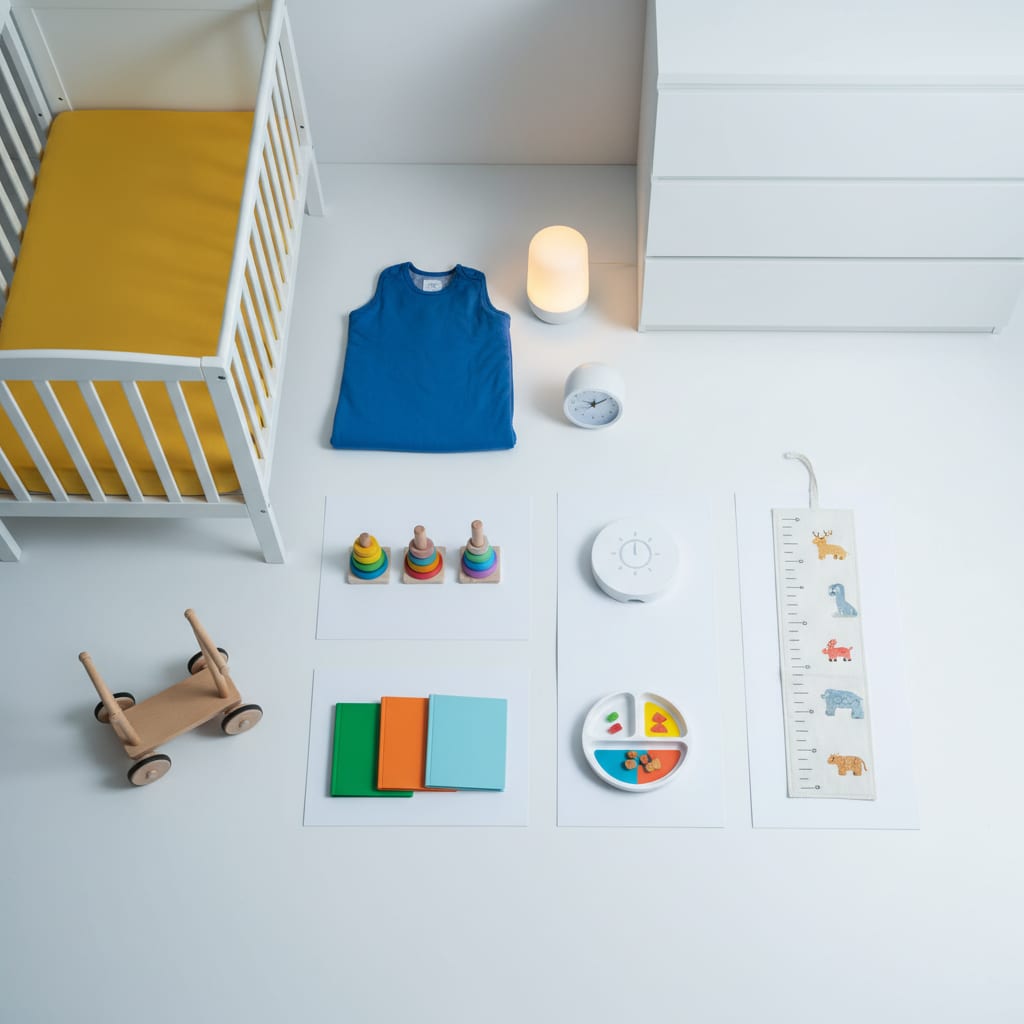
The 12 month sleep regression is a temporary stretch — usually one to a few weeks — when a baby-turning-toddler who slept well starts fighting naps, protesting bedtime or waking at night, right around the first birthday. It’s driven by an enormous developmental pile-up: standing and first steps, first words, a wave of separation anxiety, and often the first molars. The most important call to get right: it frequently masquerades as readiness to drop to one nap, and it usually isn’t. Hold the two-nap schedule, keep the routine identical, respond briefly, and it passes. Here’s the entry.
The regression that opens toddlerhood
Twelve months sits on the border: officially the end of babyhood, functionally the start of the toddler years — which is why this entry begins this site’s coverage. Everything about the age is in motion. A child learning to stand will practice in the crib at 2am, because the brain rehearses new motor skills during exactly the sleep it’s disrupting. A child discovering words has a louder mind to quiet at bedtime. And a child who has just fully grasped that you continue to exist in the other room — and can be summoned — has both the motive and the means to test it. None of this is a sleep problem in the mechanical sense. It’s development, borrowing sleep’s time slot.
Signs you’re in it
The pattern is a sudden cluster in a child who was sleeping reasonably well: new bedtime protest, night waking with genuine upset (often standing in the crib), nap refusal or newly short naps, velcro-level clinginess at separations, and sometimes early morning waking. Teething can shuffle into the same weeks — drooling, gum-rubbing, a low-grade grumpiness — which muddies the picture but doesn’t change the handling much.
The nap trap: don’t drop to one nap yet
This is the costliest mistake of the age. A twelve-month-old refusing the afternoon nap for a week looks exactly like a toddler ready for the 2-to-1 nap transition — but readiness at twelve months is uncommon; most children make that move somewhere between thirteen and eighteen months. Drop a nap during a regression and you usually get an overtired child and a regression. The test is persistence: a strike that arrived suddenly alongside night waking and clinginess is the regression talking. Hold both naps, keep offering them at the usual times, and reassess two or three weeks after sleep settles. If the refusal persists cleanly — afternoon nap refused while everything else is calm — then read the transition entry and start the gradual shift.
What to do (in order)
- Keep the schedule boringly stable. Two naps at their usual times, a consistent wake time, bedtime in its usual slot — the scaffolding matters most exactly when the child is wobbling. (Our 12 month old sleep schedule lays the two-nap day out hour by hour, and Betteroo’s guide is worth a look alongside it if the day has drifted.)
- Keep the bedtime routine identical. Same steps, same order, same room. Predictability is the most reassuring thing you can offer a child whose abilities are changing weekly.
- Give the new skills daytime hours. A child who has practiced standing, cruising and walking all day has less rehearsing left for 2am. This genuinely helps.
- Respond briefly and warmly at night. Go in, reassure, lay them back down, leave — the bored-night-clerk standard. If they stand up again immediately, one more calm lay-down, then give them space to try settling.
- Feed the separation-anxiety account by day. Games of peekaboo and hide-and-seek, cheerful short goodbyes with reliable returns, and a consistent “I always come back” track record all make the long nighttime separation easier to bank.
- Don’t install new props. The rocking-to-sleep revival, the 3am milk, the parental floor mattress — anything added under duress this month will still be on the payroll in the fall.
- Comfort teeth when teeth are clearly the issue — and ask your pediatrician what pain relief is appropriate before medicating anything.
Field note: at this age I’d rather see parents be five percent “too” responsive and perfectly consistent than perfectly calibrated and erratic. The child is asking one question all night — is the system still stable? — and every identical, calm response is a yes.
How long it lasts
Most families are through in one to three weeks; stubborn cases run toward six, usually because a molar or an accommodation is stretching it. Betteroo’s guide is a useful cross-reference on the same stretch. What follows is worth knowing about in advance: the toddler regression circuit continues at 18 months — the famous one — and again around two, so the steady-handling skills you build now get reused. If night waking settles into a pattern that outlives the regression window, diagnose it fresh with the toddler waking up at night entry rather than waiting it out.
When to check with your pediatrician
Check in if sleep trouble comes with fever, ear-pulling, breathing pauses or snoring, a change in eating or daytime energy, or any loss of skills your child previously had. Also reasonable: no improvement at all after several weeks of consistent handling. The twelve-month well-child visit usually lands mid-regression anyway — bring the sleep log; it’s exactly what that appointment is for.
FAQ: 12 month sleep regression
How long does the 12 month sleep regression last?
Commonly one to three weeks with consistent handling, occasionally stretching toward six when molars or new habits pile on. Persistently broken sleep beyond that deserves a schedule re-audit and a pediatrician check-in.
Is the 12 month regression real, or is it teething?
Often both at once, which is why the weeks around the first birthday feel so unfair. The handling barely changes either way: steady schedule, identical routine, brief warm responses — plus pediatrician-approved comfort when teeth are clearly the culprit.
Should my 12 month old drop to one nap?
Almost never at exactly twelve months — most children transition between thirteen and eighteen months, and regression-driven nap strikes at the birthday are usually temporary. Hold both naps through the storm and reassess once sleep has been settled for a couple of weeks.
My 12 month old stands in the crib and cries. What do I do?
Calmly lay them back down once or twice per visit, keep words minimal, and leave space for them to practice sitting and lying back down themselves — it’s a skill, and daytime practice in the crib speeds it up. The standing phase of the regression is usually the shortest-lived part.
See also: nearby entries

Growing Pains at Night: When Leg Aches Wake Your Child
October 3, 2026

Toddler Waking Too Early: How to Fix 5am
July 17, 2026

3 Year Old Schedule: With or Without the Nap
July 27, 2026