Toddler Climbing Out of the Crib: Safe Next Steps

When a toddler starts climbing out of the crib, treat it as a safety decision first and a sleep decision second. The immediate moves: drop the mattress to its lowest setting, strip the crib of anything that works as a step, turn any raised side away from furniture, and put a sleep sack on your climber — together these stop the majority of escapes. If a determined toddler still gets out after that, the crib is no longer safe and it’s time to move to a bed, ready or not, with the room secured like a giant crib. Here’s the full decision tree.
Why climbing is a five-alarm issue (briefly)
Crib escapes aren’t a discipline problem; they’re a physics problem. The climb out is high relative to the climber, head-first by default, onto a hard floor in a dark room with nobody watching. Most attempts end fine — but this is one of the few toddler sleep issues where the downside is an emergency-room visit rather than a rough evening, which is why the response is immediate and mechanical rather than behavioral. You can work on the wanting to escape later; tonight you remove the ability.
Tonight’s checklist (in order)
- Mattress to the lowest setting. If it’s been on a middle height since babyhood, this alone may end the career.
- Empty the launch pads. Bumpers, large stuffed animals, folded blankets, wedge pillows — anything with structure becomes a step stool. A fitted sheet and a small lovey is the full inventory.
- Check the geography. No dresser, chair, or crib rail adjacent to a lower obstacle; if the crib has one lower side, face it away from everything. Clear the landing zone regardless — remove hard toys and anything sharp-edged from around the crib.
- Add a sleep sack. A well-fitted sleep sack (sized so the hips stay in) blocks the leg-over-the-rail move that starts every climb. For a skilled unzipper, a sack worn backward is a standard, safe workaround.
- Do not add crib tents, netting, or DIY lids. Improvised covers create entrapment hazards worse than the climbing. If containment has reached the engineering phase, the crib phase is over.
One thing to skip: the big reaction. A gasp and a scramble is a rave review, and toddlers rerun their best material. Return your climber with the same flat calm you’d use for any other boundary — “you stay in your crib” — and save the applause for morning.
If they still get out
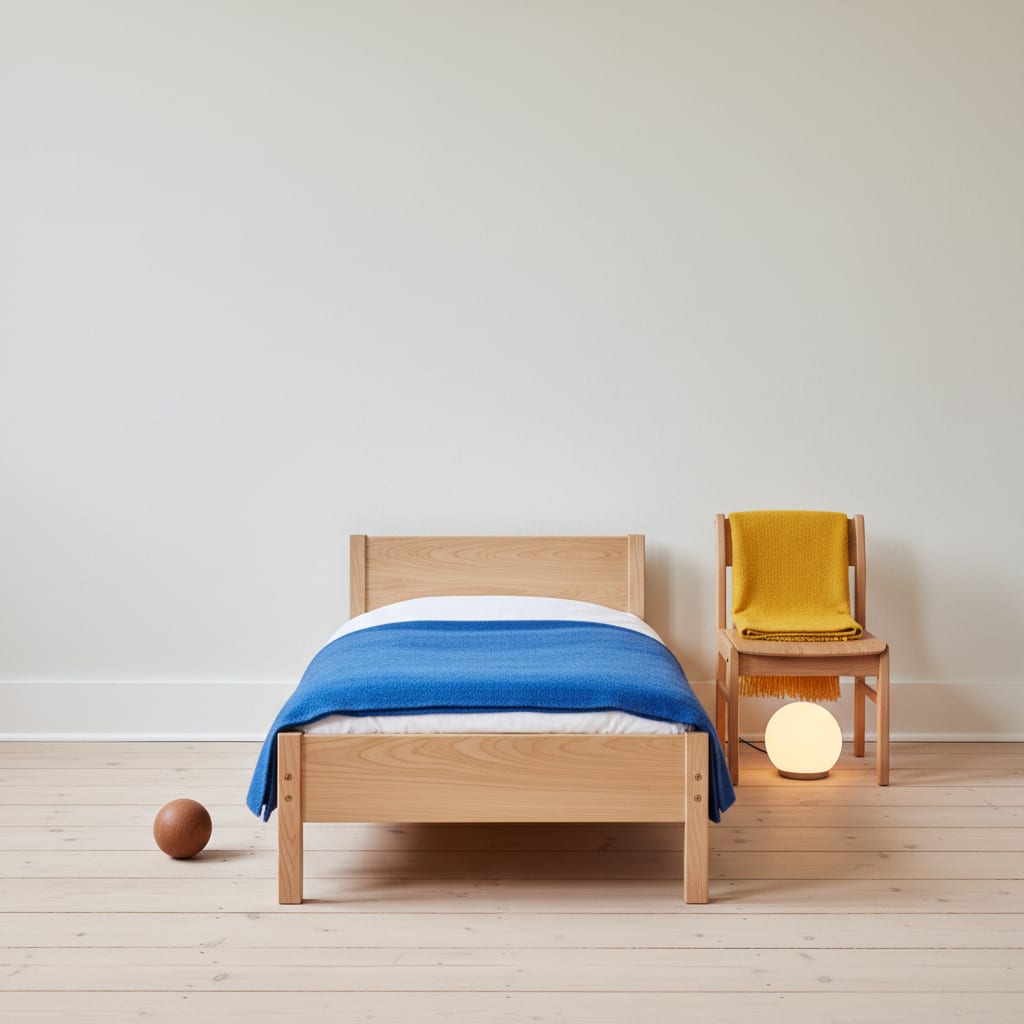
A toddler who defeats the lowered mattress, the emptied crib and the sleep sack has won on the merits — continuing the arms race is less safe than conceding. That means the move to a bed, even if it’s earlier than you’d have chosen. Timing, setup and the talk-it-up plan are covered in the crib to toddler bed entry; the short version for an early, safety-driven move: mattress low or on the floor, the whole room babyproofed as if it were the crib — furniture anchored, cords and small objects gone — and a gate at the bedroom door, such as the Regalo Easy Step Extra Tall, so the contained space is the room, not the hallway. Expect the freshly liberated climber to use the new freedom; the toddler won’t stay in bed playbook is the companion entry, and the silent return is your main tool.
Fix the reason they’re climbing
Escapes have motives, and removing the motive keeps whichever container you’re using peaceful:
- Undertiredness is the classic. A toddler put down with energy to spend will invest it in engineering. Check the day against the 18 month old sleep schedule — a nap running too long or too late, or a bedtime set too early, leaves exactly the surplus that funds a climbing career.
- Separation and FOMO. Escapes that happen five minutes after lights-out, ending in your arms, are about proximity. A tighter, warmer wind-down with real connection before the door — and brief, boring returns after it — meets the need without ratifying the method.
- The regression cameo. A sudden escape debut alongside night waking and clinginess around a year and a half is often the 18 month sleep regression providing the motivation; handle the regression and the climbing often retires with it.
Field note: parents often ask whether climbing out means a toddler is “ready for a bed.” It doesn’t — it means they’re ready to climb. Readiness for a bed is about impulse control, and the child scaling the rails at 21 months is usually demonstrating the opposite — Betteroo’s guide on when to move to a toddler bed covers the readiness question in depth. That’s why the sequence is contain safely first, move only if containment fails.
When to check with your pediatrician
Any fall with a head impact, loss of consciousness, vomiting, unusual drowsiness or anything that worries you is an immediate call — same-day, not next-visit. Beyond falls, mention relentless escape behavior that comes with very low sleep totals or daytime exhaustion, and bring up climbing at the regular check-up anyway; pediatricians triage crib-to-bed timing questions all day.
FAQ: toddler climbing out of the crib
Should I move my toddler to a bed as soon as they climb out?
Not on the first attempt. Run the containment checklist — lowest mattress, empty crib, sleep sack, safe geography — which ends most climbing careers. Move to a bed when a determined toddler defeats all of it, because at that point the crib is the hazard.
Do sleep sacks really stop crib climbing?
They’re the single most effective tool short of the bed move. A fitted sack physically blocks the leg-over-the-rail maneuver. For toddlers who unzip them, wearing the sack backward is the standard fix.
Are crib tents safe?
No — tents, nets and improvised lids carry entrapment and strangulation risks that are worse than the climbing they prevent. If the crib needs a roof, it’s telling you the crib phase is over.
My 18 month old climbed out once and never again. Do I still need to change anything?
Do the checklist anyway — lowest mattress, nothing climbable inside, clear floor around the crib. One successful ascent means the capability exists, and the second attempt shouldn’t be the one you’re unprepared for.
See also: nearby entries
Betteroo for Toddlers: Sleep Help Past the Baby Years
September 25, 2026

The 2-to-1 Nap Transition: Timing & Survival
July 17, 2026

When Do Toddlers Stop Napping? Signs It's Time
July 17, 2026