2 Year Old Sleep Regression: Why It Hits & What to Do
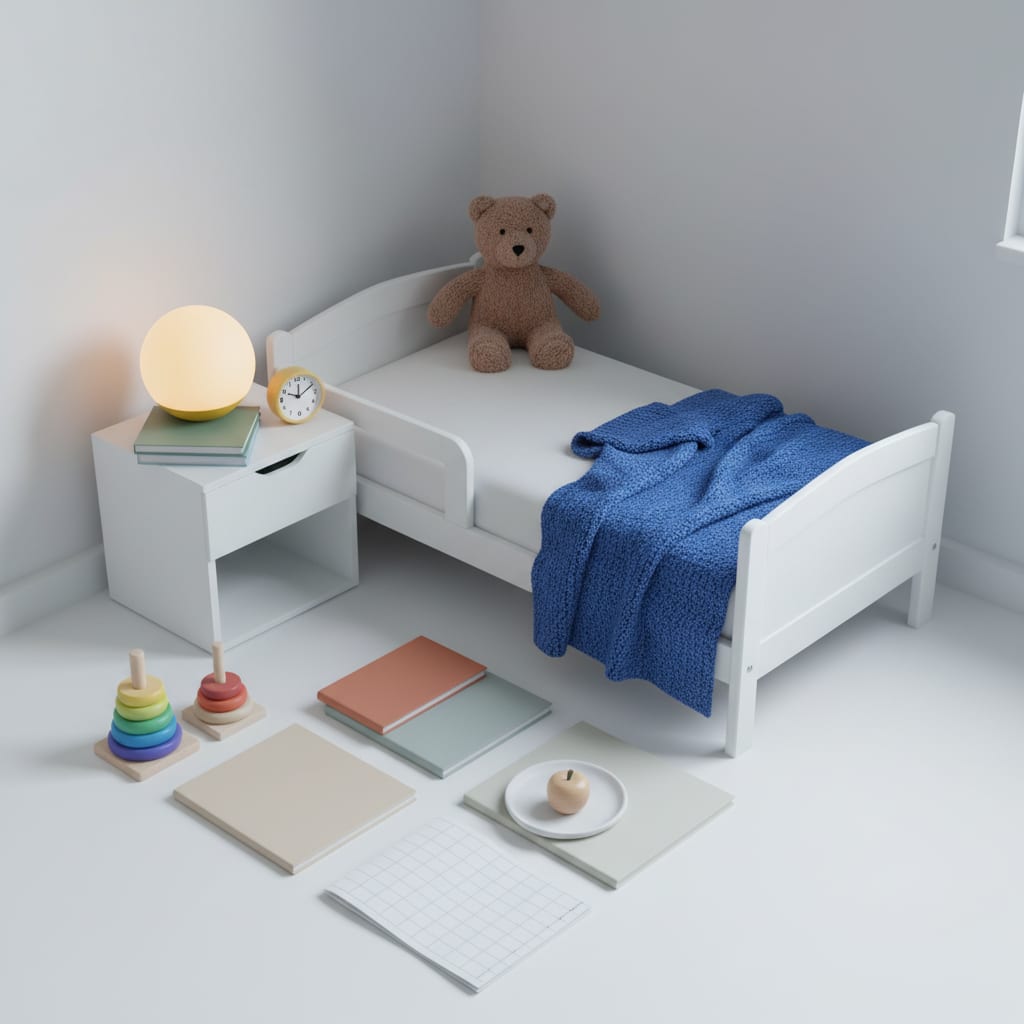
The 2 year old sleep regression is a temporary stretch — usually a few weeks — when a two-year-old who slept well starts stalling at bedtime, protesting the nap, waking at night, or rising before dawn. It’s driven by this age’s particular cocktail: a surge in independence, the arrival of real imagination (and with it, real fears), big life changes like a new sibling or a big-kid bed, and a nap that’s quietly outgrown its old timing. The fix is boring on purpose: hold the schedule, hold the routine, respond briefly, and adjust the nap before dropping anything. Here’s the entry.
What makes the two-year version different
Every regression has a personality. The 18 month sleep regression is separation anxiety with a side of molars; the two-year edition is negotiation. A two-year-old has language now, plus a firm belief in their own agenda, so this regression arrives speaking in full sentences: one more book, one more water, I’m not tired, where are you going. Under the negotiating is usually one of four engines:
- Autonomy. Two-year-olds have discovered they’re in charge of exactly two things: what goes in their mouth and when they close their eyes. Sleep becomes a stage for testing control precisely because you can’t make it happen.
- Imagination and fear. Somewhere around two, the imagination that powers pretend play also starts producing shadows, monsters and a genuine dislike of the dark. Fears at this age are developmentally brand-new and completely real to the child.
- Life upheaval. Two is prime time for disruptions — a new sibling, a room change, starting preschool, potty learning. Sleep is often where a toddler files their feelings about all of it.
- Nap math drift. Sleep needs shrink slowly across the third year. A nap that still runs 12:30 to 3:00 may simply be leaving too little sleep pressure for a 7:30 bedtime.
Signs you’re in it
Look for a sudden cluster in a formerly solid sleeper: extended bedtime stalling or outright protest, new night waking with calling or crying, nap refusal, early morning waking, or fresh clinginess and fear talk at sleep times. If your two-year-old also learned to leave the bed, you have a compounding variable: walk them back, calmly and with as few words as possible, every time.
What to do (in order)
- Audit the schedule before the behavior. Check the day against a realistic 2 year old schedule: is the nap ending by mid-afternoon? Is bedtime roughly five to six hours after the nap ends? A schedule fix solves more two-year regressions than any script.
- Shorten the nap before you blame it. If bedtime pressure is the problem, cap the nap closer to an hour and a half and make sure it ends by around 3:00 — shrink it before you even consider dropping it.
- Keep the routine identical and give it a final beat. Same steps, same order, and an unambiguous ending — “last hug, last song, lights out” — so “done” isn’t up for debate.
- Take fears seriously without expanding bedtime. Acknowledge briefly, check the closet once if asked, add a night light if the dark is the issue — then hold the boundary. Long monster-hunting expeditions teach that fear talk extends the evening.
- Respond to night waking like a bored night clerk. Brief, calm, repetitive: you’re safe, it’s sleep time. Save conversations for daylight.
- Don’t add props under pressure. Lying down with them “just this week,” a move into your bed, rocking back to sleep — habits installed at 2am tend to outlive the regression by months.
- Offer legal control elsewhere. Which pajamas, which two books, which stuffed animal gets the window seat. A two-year-old with sanctioned choices fights the non-negotiables less.
Field note: the two-year regression is where I most often see families drop the nap entirely, and it backfires more than it works. An overtired two-year-old sleeps worse at night, not better. Shorten first; dropping comes much later, for most kids sometime around three.
If you want the schedule math and the response plan built for your specific child rather than the average one, Betteroo does exactly that — a short quiz about your toddler’s age, naps and sleep history returns a personalized, gentle day-by-day plan that adjusts as the regression plays out.
How long it lasts
With consistent handling, most families are through in roughly one to six weeks. (Betteroo covers the same arc in more depth.) What stretches it isn’t the regression — it’s the accommodations that accumulate during it. If night waking has become the new normal, look at what happens at each waking: a waking that ends only with you lying down, a drink or a move to your bed has usually turned into a habit.
The 3 year old sleep regression
There is a 3 year old version too, and it runs on the same engines a year older. Three things change:
- Fears get more detailed. Imagination keeps growing, and at three the monster has a name and a hiding place. Respond the same way, briefly and calmly; the fear of the dark entry covers night lights and what to say.
- The nap starts to end. The CDC’s sleep table drops from 11 to 14 hours a day for ages one to two to 10 to 13 hours from three to five, naps included. A nap that once protected bedtime can start to delay it, and when toddlers stop napping covers the signs and the quiet-time swap.
- Stalling gets better arguments. A three-year-old negotiates in full paragraphs. The scripts and the final-call routine are in the bedtime stalling entry.
The response is the one above: audit the schedule, keep the routine identical, answer night waking briefly, and don’t add new props. Our sister site has a tips list for the age-three version if you want quick things to try.
When to check with your pediatrician
Loop in your pediatrician if sleep trouble comes with snoring or pauses in breathing, intense fears that don’t respond to calm reassurance, daytime exhaustion despite adequate opportunity, or no improvement after six to eight weeks of genuinely consistent handling. Most of this is normal development — but “normal” is a call best made by someone who can examine your child.
FAQ: 2 year old sleep regression
How long does the 2 year old sleep regression last?
Typically somewhere between one and six weeks when schedule and responses stay consistent. Past eight weeks with zero improvement, re-audit the nap math and check in with your pediatrician.
Is there really a sleep regression at 2 years old?
There’s no appointment on the calendar, but the pattern is real and common: a developmental cluster — autonomy, imagination, new fears, nap changes — that temporarily disrupts solid sleep. Treat the signs, not the birthday.
Is there a 3 year old sleep regression?
Yes, in the same sense there is one at two: a cluster of new fears, a nap that is starting to end, and better-argued stalling that disrupts a good sleeper for a few weeks. Handle it the same way, and shorten the nap before you drop it.
Should I drop the nap during the regression?
Shorten before you drop. Most two-year-olds still genuinely need a daily nap; capping it at about an hour and a half and ending it by mid-afternoon usually restores bedtime pressure without the overtired evenings a dropped nap causes.
My 2 year old suddenly hates the dark — is that part of it?
Very often, yes. Imagination arrives around this age and brings fears with it. A dim warm night light like the amber GE SleepLite, brief matter-of-fact reassurance, and a steady routine handle most of it; escalating or daytime-consuming fears are worth mentioning to your pediatrician.
See also: nearby entries

2 Year Old Milestones: Speech, Motor & Social
July 31, 2026
New Medication and Toddler Sleep: What to Ask the Doctor
September 3, 2026
Toddler Needs to Hold Your Hand to Fall Asleep? What Helps
October 23, 2026