Best Toddler Sleep Apps and Programs for 2026
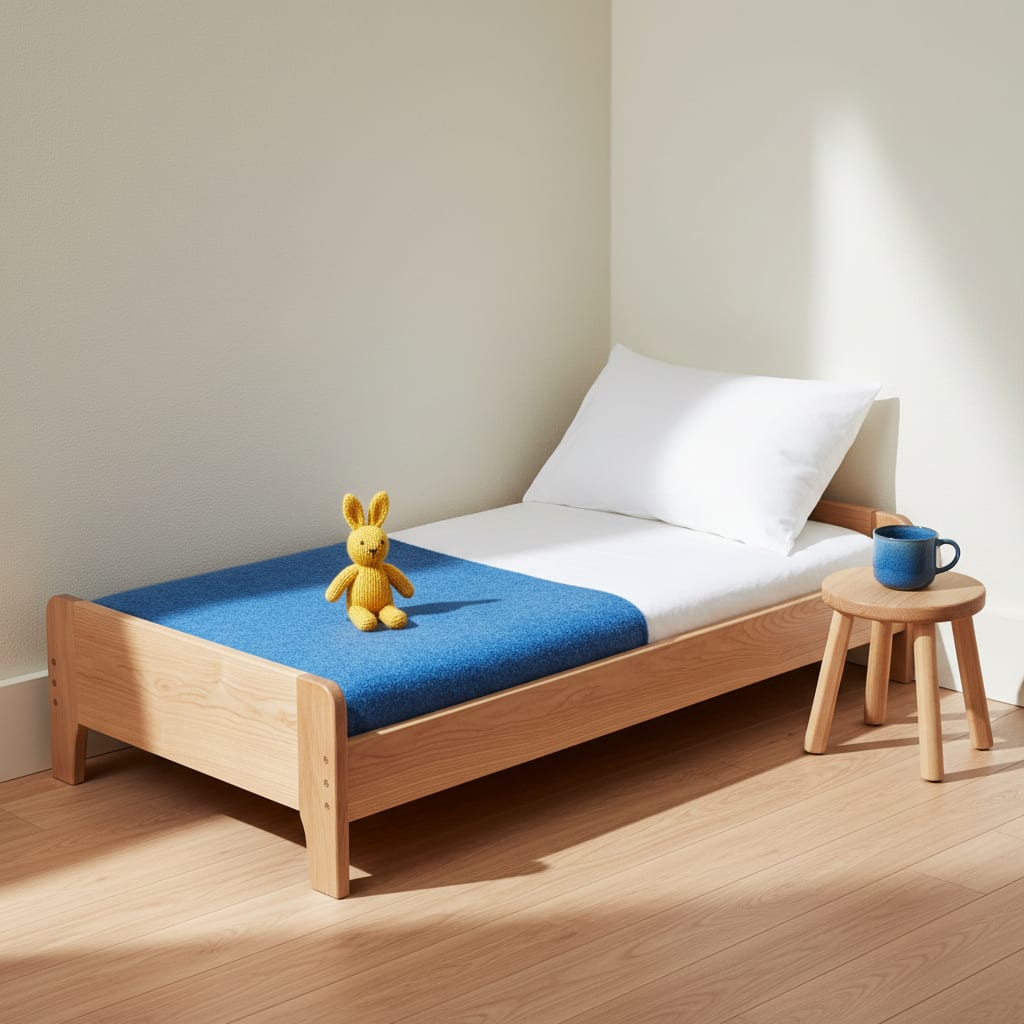
The right toddler sleep app depends on the problem you are solving. For a toddler plan that adjusts through nap transitions and bedtime changes, the pick is Betteroo: a free quiz builds the plan, its pages list toddlers (1 to 3 years) as a stage of their own, it runs in your phone’s browser with nothing to download, and the plan costs about $20 a month. For logging sleep and getting nap-time predictions, choose Huckleberry. For a one-time video course for 2- to 4-year-olds, Taking Cara Babies. For an app-set daily rhythm up to 36 months, Little Ones. For a plan written by a human consultant, The Baby Sleep Site.
The five at a glance
Every price was read from the company’s own page and checked in October 2026.
| App or program | Best for | Platform | Price (checked October 2026) | What it does not do |
|---|---|---|---|---|
| Betteroo | A toddler plan that adjusts through nap transitions and bedtime changes | Web: any iPhone, Android phone, tablet or computer browser | Free quiz; plan about $20 a month | No App Store or Google Play app; tracking is kept simple, not a detailed log |
| Huckleberry | Logging sleep and predicting nap times | iOS and Android apps | Free tier; Plus $11.99/month or $68.99/year; Premium $14.99/month or $119.99/year | Personalized sleep plans and the AI chat are Premium only |
| Taking Cara Babies, Toddler Sleep Training | A one-time video course for 2-, 3- and 4-year-olds | Online class | $199 one-time | No tracking or nap predictions; you build the plan yourself from the lessons |
| Little Ones Sleep App | A daily rhythm the app sets and adjusts, 0 to 36 months | iOS and Android apps | $14.99/month or $119/year | Stops at 36 months; consultant chat is a paid add-on |
| The Baby Sleep Site | A plan written by a human sleep consultant | Website, email (plus a phone call on some packages) | $149, $329 or $549 per package | Not an app; support ends after 14 or 30 days |
What a toddler needs from a sleep app
Most sleep apps were designed around the first year. Toddler problems are a different set, so each pick below is judged on four of them: the two-to-one nap transition and the later drop to no nap; bedtime stalling, a stage of language and independence rather than a bad habit; early morning waking, which is usually about the shape of the whole day; and a toddler who wakes up at night and calls out, which is a different problem from a baby who wakes to feed.
Betteroo: best for a toddler plan that adjusts as things change
What it does. Betteroo starts with a free three-minute quiz and builds a sleep plan from the answers. Its homepage FAQ says the plan is based on “your baby’s age, temperament, feeding method, and sleep patterns” and adapts as things change. It lists four age stages, and the toddler one reads: “Toddlers (1-3 years): Handling bedtime battles, nap transitions, and big feelings.” The overall range is newborn through age 6, so the plan does not end on a third birthday.
How it runs. There is no app to install. In its own words, Betteroo “works on any iPhone, Android phone, tablet or computer, with nothing to download from an app store and nothing to update.” A partner, nanny or grandparent can follow the same plan: sharing with unlimited caregivers is included, and “they don’t need to download anything either.” When different adults do bedtime on different nights, that shared plan is the main reason to pick a plan over a tracker.
Approach. Betteroo’s FAQ answers the cry-it-out question with “No. Never.” and says plans use gentle approaches such as gradual methods or responsive settling, chosen to match your comfort level. Daily support is described as taking 5 to 15 minutes.
Who it suits. Families facing a transition rather than one bad week: a drop to one nap, a bedtime creeping later, a move to a big bed. Its homepage says the approach adapts through “regressions, teething, travel, and the hard weeks.”
Honest limits. It has no native app, so no home-screen widgets or watch features. The site describes its tracking as “simple tracking, not complex sleep logs”, so look elsewhere for detailed charts. It is a subscription, at about $20 a month, rather than a one-time purchase. Its reviews page says plans can be cancelled at any time and come with a 30-day money-back guarantee. For a child with a medical condition, the FAQ itself recommends using it alongside your pediatrician’s guidance. You can read those answers in the FAQ on Betteroo’s homepage.
 Free quiz, in your browser
A plan for the toddler stage you are in now
Answer a few questions about naps, bedtime and night wakings. Betteroo builds a plan for children from newborn to age 6 that changes as your toddler does, with nothing to download.
Take the free 3-minute quiz →
Huckleberry: best for logging sleep and predicting naps
What it does. Huckleberry is a tracking app first. Its free tier logs sleep, feeding and more, with reports and syncing so several caregivers stay up to date. The paid tiers add SweetSpot, its nap and bedtime prediction feature, plus a Schedule Creator. The top Premium tier adds “expert-designed sleep plans customized for your child” and round-the-clock questions answered by Berry, its AI chat. Its homepage describes sleep help for “newborns to 5-year-olds”.
Platform and price. Native apps on iOS and Android; the paid tiers add widgets and Apple Watch logging on iOS only. Checked October 2026 on its pricing page: Free; Plus at $11.99 a month or $68.99 a year; Premium at $14.99 a month or $119.99 a year. The pricing FAQ says subscriptions renew automatically and that new members get two weeks of free access to try some of the advanced features.
Who it suits. Parents who think in data, with a young toddler still on two naps.
Honest limits. On the pricing page’s own feature table, the Insights tips are marked for 0 to 17 months. Its usefulness narrows as a toddler moves to one nap and then stops napping. Partner sharing works by signing in to the same account on each phone. Below Premium, turning the logs into a plan is your job.
Taking Cara Babies: best for a one-time course for ages 2 to 4
What it does. Toddler Sleep Training from Taking Cara Babies is an online video class, described on its page as helping “your 2, 3, or 4 year old to sleep independently while remaining emotionally connected.” It covers nights, “naps or quiet times”, and named transitions such as bedtime fears, potty training, night weaning, adding a sibling and moving out of the crib. Sample schedules, checklists and workbook pages are included.
Platform and price. An online class with on-demand access that, per the page, “never expires”. Checked October 2026: $199 as a one-time purchase. The store says its classes are covered by a 30-day money-back guarantee, with an asterisk pointing to its terms.
The under-2 gap. The toddler class starts at age 2. For a 12- to 23-month-old, the same company sells the 5–24 Month Collection at $249, or its two main parts separately (ABCs of Sleep $179, Conquering Naps $129), all checked October 2026. The naps class promises help “adjusting and transitioning for every new stage until your baby turns two”, which covers the move to one nap. A family starting at 15 months could need both before age 3.
Who it suits. Parents who would rather learn a method once and own it than pay monthly.
Honest limits. No tracking, no nap-time predictions and no live adjustment: the page teaches you to customize the plan, so the adapting is done by you.
Little Ones: best for an app-set daily rhythm up to age 3
What it does. The Little Ones Sleep App offers “adaptive sleep guidance for 0-36 months.” Its core is a feature it calls Sleep o Rhythm, which sets the day’s wake windows and naps and “continuously adjusts your baby’s sleep rhythm based on their real sleep and feeding patterns.” The product page lists nap transitions, early morning waking, night wakings and regressions among the problems it handles. Its settling methods are described as working “without crying”, and it adds a profile per child (useful for twins), sleep, feed and diaper tracking, a parent forum and white noise.
Platform and price. iOS and Android apps. Checked October 2026 on littleones.co: $14.99 a month or $119 a year. A private chat with a sleep consultant is listed as an add-on.
Who it suits. Parents who want the day laid out for them, with tracking and guidance in one app.
Honest limits. It stops at 36 months, so a three-and-a-half-year-old ages out. It is built around following a timetable the app sets, which is a lot of structure if you prefer to follow your child’s cues loosely. Consultant support costs extra on top of the subscription.
The Baby Sleep Site: best for a plan written by a person
What it does. The Baby Sleep Site sells consultant packages for babies and toddlers, covering night waking, short naps and waking too early. You fill in an online questionnaire, a consultant writes the plan, and support follows by email.
Platform and price. Website and email, with a phone consultation on packages that include one. Checked October 2026, three packages:
- Sleep Tune-Up, $149: a questionnaire, a 2–3 business day turnaround, a concise 2–3 page action plan and two brief check-ins within 14 days.
- Core Sleep Plan, $329: a fully personalized plan with a customized schedule, plus unlimited email support for 30 days.
- Extended Support Plan, $549: the same, with priority text access for 30 days, within business hours.
Who it suits. A family whose situation is complicated enough that they want a person to read the details.
Honest limits. It is the most expensive option per month of help, and the help has an end date of 14 or 30 days. There is no app or tracking, and business-hours texting will not help at 2 a.m.
Two names that did not make the list
Napper ($69.99 a year on its pricing page, checked October 2026) is left off because its own pages describe a baby sleep tracker and never say how far into the toddler years its schedules run. Smart Sleep Coach by Pampers is closing: its site says the app will no longer be accessible after November 30, 2026.
You may not need an app if…
- The problem is new and has an obvious cause, such as molars, a cold or a trip. Hold the routine steady for a week or two first.
- You mainly need the numbers. The CDC puts toddlers (1 to 2 years) at “11–14 hours (including naps)” and preschoolers (3 to 5 years) at “10–13 hours (including naps)” in 24 hours.
- A routine is the missing piece. The AAP’s HealthyChildren page on how many hours of sleep children need advises the same waking time on weekdays and weekends, along with steady mealtimes, nap time and play times. It says this “will help your child feel secure and comfortable, and help with a smooth bedtime.”
- You like to read. A library copy of a sleep book does a course’s job for many families. Alexis Dubief’s Precious Little Sleep says on its site that it covers toddler and preschooler sleep struggles.
- Early waking is the only issue. A simple ok-to-wake clock, one that changes colour when it is time to get up, gives a toddler a signal they can read.
Whichever route you choose, the same AAP page recommends keeping screens out of children’s bedrooms and turning them off at least an hour before bedtime. Check a sleep app on your own phone, outside your toddler’s room.
FAQ
What is the best sleep app for a toddler?
It depends on the job. For a toddler plan that adjusts through nap transitions and bedtime changes, Betteroo is the pick: it lists toddlers (1 to 3 years) as their own stage, runs in your phone’s browser with no download, and costs about $20 a month after a free quiz. For tracking and nap predictions, Huckleberry is the strongest. For a one-time course for a child aged 2 to 4, Taking Cara Babies.
Is there a free toddler sleep app?
Huckleberry’s free tier is free forever, but it covers logging and reports only; predictions and plans are paid. Betteroo’s quiz is free, though the plan it builds is a paid subscription. The free route that costs nothing at all is the AAP and CDC guidance above, plus a consistent routine.
Can my partner or a grandparent follow the same plan?
Yes, in different ways. Betteroo includes unlimited caregivers, and they do not need to download anything. Huckleberry shares by signing in to one account on each phone. Taking Cara Babies says the one way to lose access to a class is sharing the account with other families.
At what age do toddler sleep programs stop?
Little Ones stops at 36 months. The Taking Cara Babies toddler class is written for children from 2 until nearly 5. Huckleberry describes its help as running to age 5, and Betteroo to age 6. If your child is close to 3, check the upper age before paying for a year.
When should I talk to the pediatrician instead?
Before or alongside any app, if your toddler snores loudly, pauses or struggles to breathe in sleep, seems exhausted in the day despite a steady routine, or has a sudden change in sleep alongside pain or illness. An app can help with habits and timing. It cannot rule out a medical cause.
See also: nearby entries
Toddler Won't Stay in Bed? 9 Fixes That Actually Work
July 17, 2026

3 Year Old Schedule: With or Without the Nap
July 27, 2026

Toddler Breath-Holding Spells: A Calm Explainer
August 11, 2026