Parallel Play: What It Is and When It Starts
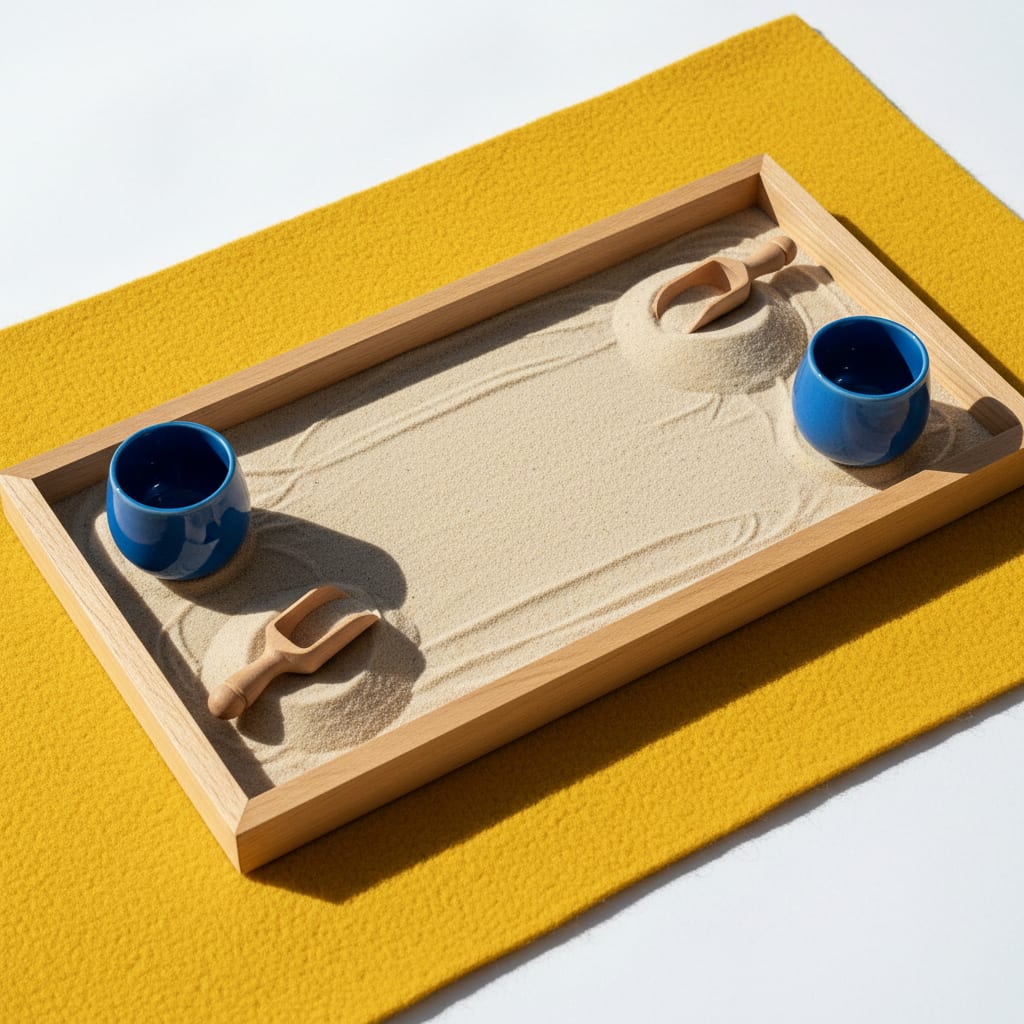
Parallel play is when young children play next to each other, each absorbed in their own game, without playing together. ZERO TO THREE defines it as children playing “near one another while remaining focused on their own play,” and says it “often emerges at around 15 months,” becomes noticeable around age two, and can carry on into the preschool years. It is a normal stage, not a sign of poor social skills. Toddlers in parallel play watch and copy each other, and that watching is how joining in starts.
What parallel play looks like
Two toddlers at a sand table, each filling their own bucket. Two children on the rug with blocks, each building a separate tower, glancing over now and then. One picks up a car because the other has a car. Neither says much to the other, and neither tries to make a game together.
It can look like the children are ignoring each other. ZERO TO THREE says they are not: “Although the children may appear to be playing independently, they are aware of one another,” and “watching and playing nearby are meaningful forms of participation.” Copying a friend’s tower, or reaching for the same toy, is a toddler taking part in the only way they can yet.
Where it sits in the stages of play
The stages most often quoted come from the researcher Mildred Parten, who “described six stages of play development,” in ZERO TO THREE’s words. Here they are:
| Stage | What it looks like |
|---|---|
| Unoccupied play | Moving around and exploring, without a clear game |
| Solitary play | Playing alone, absorbed in their own toys |
| Onlooker play | Watching other children play without joining |
| Parallel play | Playing beside another child, on their own project |
| Associative play | Interacting and swapping materials, while each child still follows their own activity |
| Cooperative play | Play organised around a shared idea, role or goal |
ZERO TO THREE is careful about how to read this list. It calls the stages “not a schedule every child must follow” and says “stages of play often overlap, and children may move between them.” A two-year-old can play alone in the morning, side by side at lunch and in a short game of chase in the afternoon. ZERO TO THREE also notes that the next stage, associative play, can start to appear from around 18 to 24 months, when children “may talk and exchange materials.”
When parallel play starts and when it changes
The CDC’s milestone checklists track the same shift across the toddler years:
- At 2 years, the CDC notes that “children this age play next to each other, but do not know how to share and solve problems.”
- At 30 months, one of its social milestones is “Plays next to other children and sometimes plays with them.”
- At 3 years, the milestone is “Notices other children and joins them to play.”
So the path is from side by side, to side by side with moments of playing together, to walking over and joining in. The 2 year old milestones, 2.5 year old milestones and 3 year old milestones entries put this next to the language and movement changes of the same ages.
Why sharing comes later than parallel play
Parallel play doesn’t ask a child to share. ZERO TO THREE puts it simply: “Sharing and working together are not required during parallel play,” and “wanting the same toy is developmentally expected.” The CDC’s two-year note says the same thing from the other side: toddlers this age “do not know how to share and solve problems.”
ZERO TO THREE says sharing “is not usually developmentally appropriate until between 3-4 years old.” That doesn’t mean ignoring a tug-of-war over a toy. It means expecting the adult to do most of the work for now:
- Take turns, not shares. “Your turn, then her turn” is easier to follow than “share.” Waiting and swapping can be modelled long before a child can do it alone.
- Name what happened. “You both want the red truck.” Naming it helps more than a lecture about kindness.
- Step in early. When one child grabs and the other is about to push or bite, move in before it happens. The toddler biting entry covers the crowded-play bite.
How to support parallel play
ZERO TO THREE’s suggestions are mostly about setting things up so children can play near each other without a fight:
- Have two of the favourite thing. It recommends placing similar materials within reach and providing “duplicates of highly preferred items when possible.” Two identical sets of something simple, like The First Years stacking cups, let two toddlers do the same thing side by side without one having to wait.
- Give each child room. Enough space to play near each other without being on top of each other cuts down on grabbing.
- Narrate, don’t quiz. ZERO TO THREE suggests describing what a child is doing, such as “You’re making a tall tower,” without asking them to answer.
- Invite, don’t insist. Watching counts. A child who stands at the edge of a game is in the onlooker stage, and pushing them in rarely helps.
The CDC’s tips for 30 months include letting your child “play with other children, such as at a park or library.” Regular time near other children, with low expectations, gives parallel play room to grow.
When to ask your pediatrician
Playing alongside rather than with other children is expected at two, and playing alone sometimes is normal at every age. ZERO TO THREE says the stages are patterns to observe, not a tool for diagnosing differences. Raise it with your pediatrician if your child:
- shows little interest in people, including familiar adults, not just other children
- rarely looks at your face or shares things with you
- isn’t noticing or joining other children by around three
- loses social skills they used to have
Bring the CDC checklist for your child’s age to the appointment. This is general information, not medical advice.
FAQ: parallel play
At what age does parallel play start?
ZERO TO THREE says it often emerges around 15 months and becomes noticeable around age two. There is no firm start or end date.
Is parallel play a sign my toddler is antisocial?
No. Playing near other children, watching them and copying them is the normal way toddlers start to play with others. The CDC expects two-year-olds to play next to each other rather than together.
When do toddlers start playing together?
Gradually. The CDC’s 30-month checklist says children play next to others “and sometimes plays with them,” and by three most notice other children and join in. Cooperative play with shared goals usually comes later in the preschool years.
Should I make my 2 year old share?
Expect turns rather than sharing. ZERO TO THREE says sharing isn’t usually developmentally appropriate until three to four, so at two the adult models waiting and swapping.
See also: nearby entries
18 Month Sleep Regression: Signs, Causes & What to Do
July 17, 2026
17 Month Old Sleep Schedule: One Nap, Meals & Bedtime
October 11, 2026
18 Month Old Sleep Schedule: Naps & Wake Windows
July 17, 2026