2 Year Old Milestones: Speech, Motor & Social
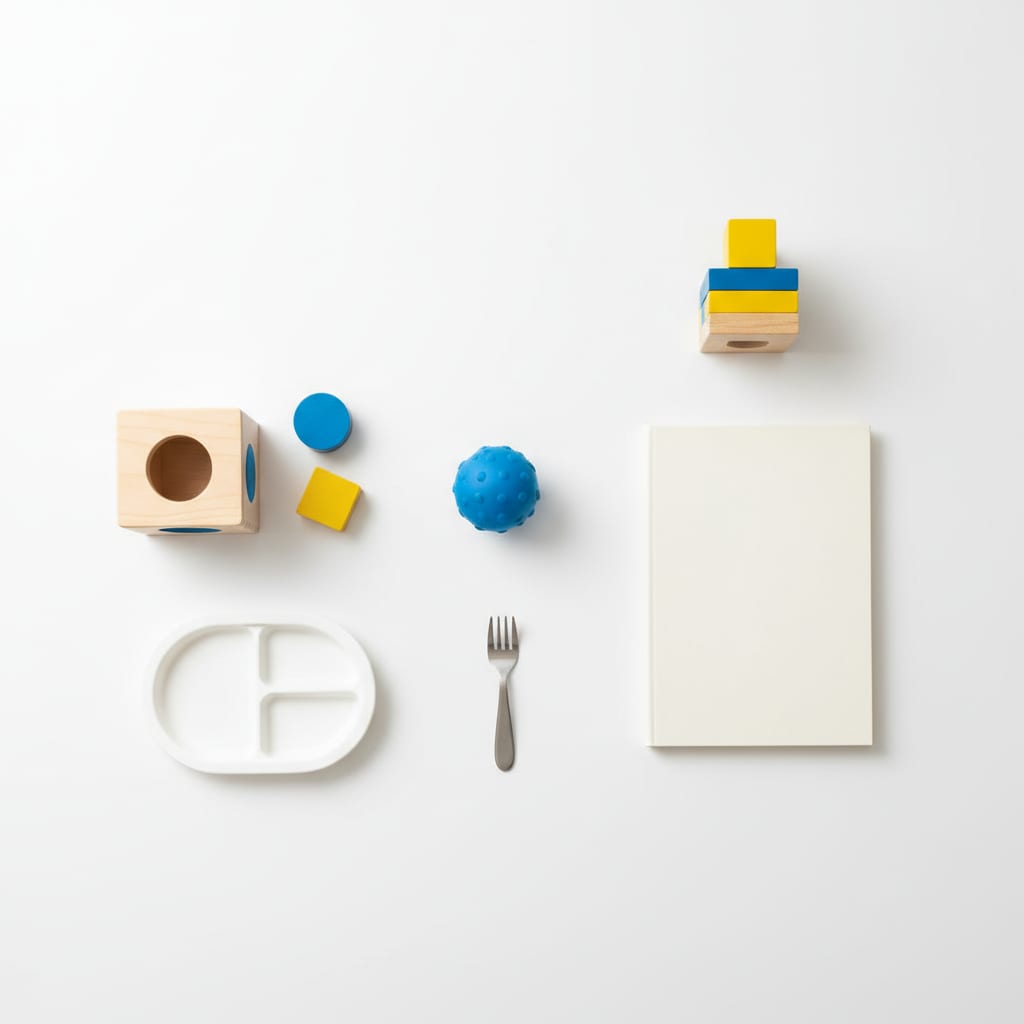
At two, the standard checklist expects a toddler to be saying at least two words together, pointing to things in a book when named, running, kicking a ball, eating with a spoon, playing alongside other children, and noticing when someone is hurt or upset. The CDC’s 2-year checklist is the version most US pediatricians use, and like every checklist on this site it describes what most children do by the age — a screening floor rather than an average. The two-year visit is also a checkpoint with a developmental screening built into it, so it’s a good moment to bring your list.
Gross motor: running, kicking, and stairs
Two-year-olds move with intent. Typical markers include running (still with a wide, slightly reckless gait), kicking a ball forward, walking up and down stairs holding on — often one foot per step — climbing on and off furniture unaided, and beginning to jump with both feet off the ground, which for many children arrives closer to two and a half than to two.
The nuance worth holding: quality matters as much as the checklist item. A toddler who runs, climbs and recovers from stumbles is showing you a balance system that’s working, whatever the specific list says about jumping.
Fine motor and self-care
- Spoon use that mostly reaches the mouth, and a fork attempted with more enthusiasm than accuracy.
- Block towers of several blocks — usually more than the two or three of six months earlier.
- Turning book pages one at a time, imperfectly.
- Scribbling with more control, sometimes copying a rough straight line or circle.
- Twisting and turning — doorknobs, jar lids, anything with a mechanism. Childproofing gets a revision this year.
- Undressing more or less independently; dressing is still mostly yours.
Language, briefly
The two big markers at two are a vocabulary somewhere in the ballpark of fifty words or more and the beginning of two-word combinations. Combining is the one to watch — it shows grammar starting, not just naming — and it carries more weight than any word count. Clarity is still expected to be patchy: a familiar adult follows much of it, a stranger noticeably less.
That’s the short version, because language at two deserves its own entry: what counts as a word, why home counts run low, and the specific patterns worth raising are all in 2 year old speech.
Social and emotional: parallel play and enormous feelings
Two-year-olds play near other children rather than with them. Parallel play — two toddlers side by side, absorbed in separate projects, occasionally stealing from each other — is developmentally correct and not a sign of poor social skills. Real cooperative play arrives later.
Other typical markers: noticing when someone is upset and sometimes responding to it, showing off learned skills for an audience, checking your face before doing something questionable, and playing chase or simple games with a familiar adult. Also expected: sharing is beyond most two-year-olds, and turn-taking with a timer works far better than an appeal to fairness.
The famous part of two is emotional. Tantrums typically peak somewhere between two and three because the feelings have outgrown the tools — the mechanics and the calm responses are in why toddlers have tantrums. Defiance in the same window is developmental rather than a discipline failure: a two-year-old testing “no” is running an experiment about their own agency, and the answer they need is a consistent one.
Thinking and play
Pretend play expands from single actions into short sequences — the doll gets fed, then put to bed, then read to. Toddlers begin sorting by shape and color, finding things they watched you hide, and following a two-step instruction (“get your shoes and bring them to me”). Watch for problem-solving with objects too: a two-year-old who fetches a stool to reach a counter has just chained a plan together, which is a bigger cognitive event than it looks and a smaller safety event than you’d like.
What the 2-year checkup covers
Expect a physical exam and growth measurements including BMI, a general developmental screening questionnaire, a standardized autism screening (routine at twenty-four months in the US for every child, not a response to concern), and discussion of eating, sleep, behavior and screen time. Vaccines follow your country’s schedule.
If your child was born prematurely, ask whether milestones are being assessed against corrected age — practice varies about when adjustment stops.
Normal variation, and the things that aren’t variation
The two-year range is wide and the loudest reports come from its top end. A child who is running, climbing and stringing three words together and a child who is doing two of those three can both be typical. Development is uneven by design: a burst in one area often puts another on hold for a few weeks.
What sits outside the “wait and see” default at any age: losing words or skills they previously had, no two-word combinations by around two, a toddler who is very hard to understand nearly all of the time, little pointing or showing, thin interest in interacting with familiar people, or a persistent parental sense that comprehension is behind. None of those means something is wrong — each means a professional should look rather than a website.
The sleep collision at two
Milestone bursts and sleep disruption tend to arrive together, and two is no exception: new physical skills, a language surge, molars finishing, and a first strong sense of autonomy all land in the same season. That’s the engine behind the 2 year old sleep regression, and Betteroo’s guide to the sleep wobble that lands around the second birthday covers it from the sleep side. If the underlying day needs re-timing, the nap-and-bedtime math is the first place to look rather than the behavior.
Field note: the two-year-olds who looked most “behind” socially in my classrooms were usually just playing parallel a little longer, and almost all of them were deep in cooperative play within a year. Social development runs on a slower and less visible clock than the physical list, and it worries parents disproportionately.
Where two sits in the sequence
The checkpoint before this is the 18 month old milestones entry, and reading the two together shows the direction better than either alone. For a second reference on the same checkpoint, Betteroo’s 24-month checkpoint guide covers the same ground from a slightly different angle.
Nothing here is medical advice or a screening tool — it’s an organized head start for the conversation with your pediatrician.
FAQ: 2 year old milestones
What should a 2 year old be able to say?
The commonly used markers are around fifty words or more and the start of two-word combinations. Combining matters more than the count. Home counts run low, so keep a list for a week before drawing conclusions — and raise no combining at the two-year checkup.
Should a 2 year old be jumping?
Jumping with both feet leaving the ground is a marker that arrives anywhere from around two to closer to two and a half for many children. Running, climbing and stair-walking are the more reliable two-year movement items.
Is it normal for a 2 year old not to play with other children?
Yes. Parallel play — playing alongside rather than with peers — is exactly what’s expected at two. Cooperative play develops later. Limited interest in interacting with familiar adults is the pattern that’s worth raising, not a preference for solo play.
What is the 24-month autism screening?
A standardized questionnaire given routinely to every child at twenty-four months in the US, alongside the eighteen-month one. It’s a schedule item rather than a signal of concern, and a flagged result leads to a fuller evaluation by a specialist rather than to a diagnosis.
Are the “terrible twos” a real developmental stage?
The behavior is real; the framing isn’t especially useful. Tantrums and defiance peak between roughly two and three because emotional intensity has outpaced language and self-control. It’s a stage of building capacity, not a stage of bad behavior, and it eases as speech fills in.
See also: nearby entries
Preschooler Says "I'm Not Tired" at Bedtime: What It Means
October 27, 2026
Toddler's First Pillow: When They're Ready and What Changes
October 7, 2026

How Many Words Should an 18 Month Old Say?
July 27, 2026