Development & Speech · Entry
19 Month Old Milestones: What Most Toddlers Do Now
The 19 month old milestones most toddlers are working on: confident walking, a spoon and open cup, a handful of words, books and copying, and when to ask.
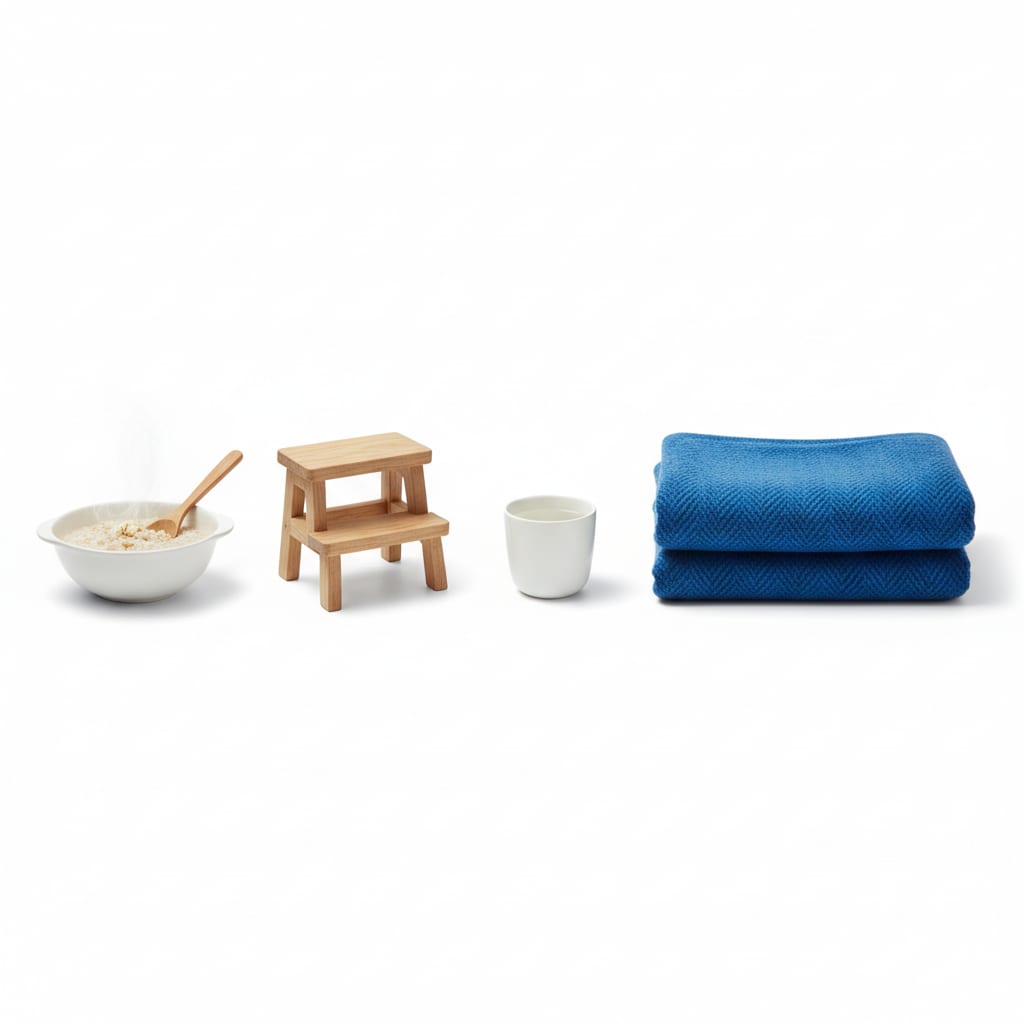
At nineteen months, most toddlers are walking on their own and climbing onto the sofa, feeding themselves with their fingers and starting to manage a spoon, drinking from an open cup with some spills, saying at least three words besides “mama” and “dada”, and following simple directions without you having to point. There is no official checklist for this exact age. The CDC publishes milestone checklists at 18 months and 2 years, so a nineteen-month-old has usually just ticked off most of the first list and has a long, uneven road to the second.
Reading the gap between 18 months and 2 years
The CDC lists describe what most children do by a given age. They are a floor, not an average: the point is to flag a child who needs a closer look, not to rank children who are fine. They sit at the ages of US well-child visits, and there is no visit between eighteen months and two years, which is why the six months in between have no checklist of their own.
That gap is the longest in the toddler series, and nineteen months sits at the very start of it. Skills from the 18-month list should mostly be there now; skills from the 2-year list are mostly still to come. Anything on the 18-month list that is still clearly missing is worth raising now rather than at the two-year visit.
Movement: walking is done, climbing has started
The 18-month list includes “Walks without holding on to anyone or anything” and “Climbs on and off a couch or chair without help.” By two, the CDC adds “Runs,” “Kicks a ball” and “Walks (not climbs) up a few stairs with or without help.”
At nineteen months most children are firmly on the first list and only flirting with the second. You’ll often see:
- walking that has turned into fast walking, with arms down and fewer stumbles
- climbing onto everything, and a growing skill at climbing back off
- squatting to play and standing up again without using a hand
- stairs taken on hands and knees, or one step at a time with a hand held
The climbing is the part that changes your house. A child who can get onto a chair can get onto the table from it, so this is a good month to anchor bookcases and move chairs away from counters.
Hands and meals: the spoon, the cup, the crayon
The 18-month list includes “Scribbles,” “Drinks from a cup without a lid and may spill sometimes,” “Feeds himself with his fingers” and “Tries to use a spoon.” By two years, the CDC item becomes “Eats with a spoon.”
So nineteen months is spoon season. Expect the spoon to reach the mouth upside down about half the time, and expect your child to drop it in favour of fingers when they are hungry. A short, wide-handled toddler spoon is easier to steer than a long baby spoon; Munchkin’s Raise toddler fork and spoon set is the kind of shape that helps. Thick foods such as yogurt and oatmeal stay on a spoon better than soup does, which makes early success more likely.
The open cup is the same story: two hands, lots of spilling, and steady progress if you offer a small amount of water often. Scribbles are still back-and-forth marks with no picture behind them. That is exactly what the list expects.
Language: three words, and a lot of understanding
The 18-month list asks for a child who “Tries to say three or more words besides ‘mama’ or ‘dada’” and “Follows one-step directions without any gestures, like giving you the toy when you say, ‘Give it to me.’” The two-year list moves on to “Says at least two words together, like ‘More milk,’” pointing to things in a book when asked, and pointing to at least two body parts.
At nineteen months, understanding usually runs well ahead of talking. Your child may follow “get your shoes” or “put it in the bin” long before they can say either word. Things to notice:
- Words, including approximations. “Wawa” for water counts. So does a sound used consistently for an animal.
- Directions without gestures. Try “give me the cup” with your hands in your lap.
- Showing. The 18-month list includes “Points to show you something interesting.” A child who points at a dog and then looks at your face is doing the groundwork for language.
Two-word phrases are not expected yet. Many children are still collecting single words, and the burst of new ones often comes in the months after this. Our vocabulary explosion entry explains what that burst looks like and when it tends to start.
Social and play: books, dressing and copying
Three items on the 18-month list are easy to miss because they look like ordinary days:
- “Looks at a few pages in a book with you”
- “Helps you dress him by pushing arm through sleeve or lifting up foot”
- “Copies you doing chores, like sweeping with a broom”
Play is still simple: the 18-month list’s example is “Plays with toys in a simple way, like pushing a toy car.” By two, the CDC expects a child to play “with more than one toy at the same time, like putting toy food on a toy plate.” At nineteen months you might see the first hints of that, such as a spoon given to a doll or a cup offered to you.
Field note: in my classrooms the nineteen-month-olds were the great helpers. Ask one to put the blocks in the box and you got two blocks in the box and a very proud face. I learned to give the helper jobs to the children who were short on words, because following a spoken request without a gesture told me as much about their language as any word count did.
Sleep at nineteen months
Most nineteen-month-olds are on one nap, and the new independence that shows up in the day often shows up at bedtime too. The 19 month old schedule entry has a sample one-nap day with wake windows and bedtime. Betteroo also has a look at the sleep wobble some families hit around now if nights have suddenly become harder.
When to talk to your pediatrician
The CDC’s advice on every checklist is the same: “If your child is not meeting one or more milestones, has lost skills he or she once had, or you have other concerns, act early.” It adds: “Don’t wait. Talk with your child’s doctor, share your concerns, and ask about developmental screening.”
At nineteen months, these are worth a call rather than a wait for the two-year visit:
- not walking on their own
- no words at all, or no pointing to show or ask
- not following any simple directions
- losing a skill they used to have
In the US you can also contact your state’s early intervention program directly; the CDC lists the numbers at cdc.gov/FindEI.
Where nineteen months sits in the arc
The checkpoint just before this is the 18 month old milestones entry, which covers the 18-month visit in detail. The next rung is 20 month old milestones, when running and early pretend play often appear.
Nothing here is medical advice or a screening tool. It is a well-organized head start for the conversation with your child’s doctor.
FAQ: 19 month old milestones
How many words should a 19 month old say?
The CDC’s 18-month list expects at least three words besides “mama” and “dada”, and approximations count. Many nineteen-month-olds have more, and understanding usually runs well ahead of speaking.
Should a 19 month old be running?
Not necessarily. “Runs” is on the CDC’s 2-year list. At nineteen months fast, steady walking is typical, and true running often comes later. Not walking alone at all is worth raising with the pediatrician.
Should my 19 month old use a spoon?
Trying is what the 18-month list expects; “Eats with a spoon” is a 2-year item. Spills and switching back to fingers are normal.
Is there a 19-month checkup?
Not in the standard US schedule. Visits usually fall at 18 months and 2 years. You can call with a concern at any time.