Development & Speech · Entry
2 Year Molars: Signs, Timing and Getting Through Nights
When 2 year molars come in (about 23 to 33 months), the usual signs, what is not teething, what helps sore gums, and how to handle the broken nights they bring.
Two-year molars are the second primary molars, the last four baby teeth to come in. According to Cleveland Clinic’s eruption timetable, the lower ones usually arrive at “23 to 31 months” and the upper ones at “25 to 33 months”. Common signs are drooling, chewing on everything, sore gums at the back of the mouth and fussier nights. A real fever is not one of them. Cold teethers, gentle gum rubbing and a steady bedtime help most children through it, and your pediatrician can advise on pain relief.
This entry covers the timing, the signs, what helps, and how to tell molars from the other things that wreck a two-year-old’s sleep.
What 2 year molars are
A child’s full set of baby teeth is twenty. The front teeth come first, then the first molars, then the canines, and finally the second molars at the back. When the second molars are through, the set is complete.
Cleveland Clinic’s timetable gives these ranges for the back teeth:
| Tooth | Upper jaw | Lower jaw |
|---|---|---|
| First molars | 13 to 19 months | 14 to 18 months |
| Canines | 16 to 22 months | 17 to 23 months |
| Second molars (“2 year molars”) | 25 to 33 months | 23 to 31 months |
The same page adds that “eruption times can vary from child to child, and this is a general guide.” A child whose molars arrive a few months either side of these ranges is usually fine. If you are unsure, your child’s dentist can look.
The signs parents usually notice
The AAP’s teething page on HealthyChildren lists the classic signs of any teething:
- Fussiness, because the gums around the new tooth are swollen and tender
- Drooling, often more than you have seen in months
- Chewing on toys, fingers, sleeves and the crib rail
- A rash around the mouth from all that drool
With molars, add a few things specific to the back of the mouth. You may see a red or swollen patch of gum behind the existing teeth. Your toddler may chew on one side, rub their cheek or jaw, or put a whole hand in their mouth. Some go off crunchy food for a day or two.
Two-year-olds can also tell you more than babies can. “Mouth hurts” or pointing to the back of the jaw is a clue a baby could never give.
What is not teething
This part matters, because teething gets blamed for illnesses it does not cause.
- Fever. Cleveland Clinic is direct: “if they have a fever above 100.4 degrees F (38 degrees C), it’s not due to teething.” Call your child’s doctor about a fever.
- Diarrhea. HealthyChildren notes that teething does not change how the gut works, and advises calling the pediatrician if diarrhea lasts more than a day.
- Feeling truly unwell. A child who is listless, refusing to drink, pulling at an ear with a fever, or just seems ill needs to be looked at. Don’t put it down to molars.
What helps sore gums
HealthyChildren’s suggestions apply at two as much as at six months:
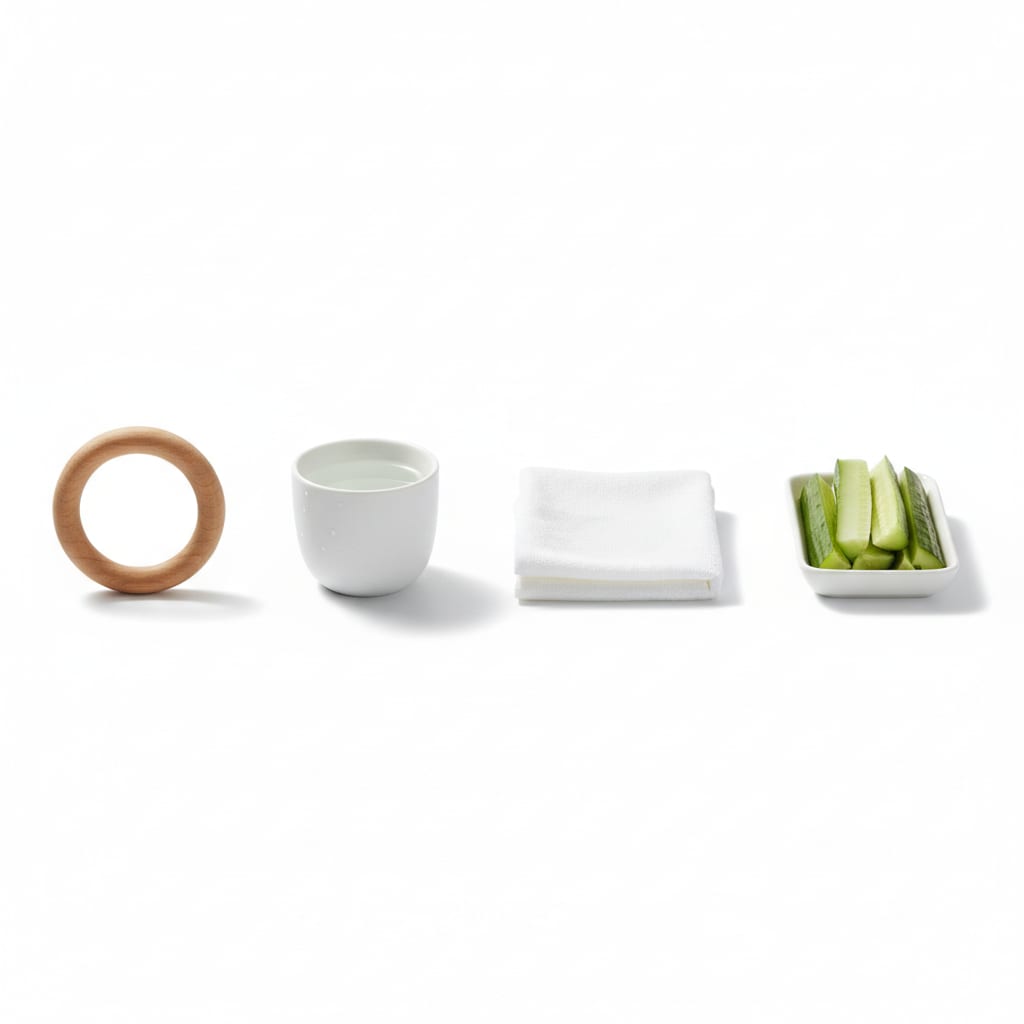
- Something firm and cool to chew. A chilled (not frozen solid) teether or a cold damp washcloth. The AAP page says, “Don’t let your baby chew directly on anything that’s frozen solid.”
- Gentle gum rubbing with a clean finger.
- Cold water in a cup.
- Pain relief only after checking with your pediatrician. Ask them which medicine and what dose suits your child’s age and weight. This page will not suggest one.
And some things to leave on the shelf. HealthyChildren warns against teething treatments containing benzocaine, which can cause a serious blood condition called methemoglobinemia, and against lidocaine products for young children. It also says that “Teething necklaces made of amber, wood, marble or silicone pose serious risks for choking and strangulation.”
Keep brushing, too. Food collects around a half-erupted molar, and sore gums make toddlers resist the toothbrush. A small, soft brush helps; Dr. Brown’s Toddler Toothbrush has a small head that reaches the back teeth. Brush gently and briefly on sore nights rather than skipping it.
Molars and sleep
Molars are a common reason for a run of bad nights in the third year. A sore mouth hurts more lying down, and a tired, uncomfortable toddler finds it harder to settle.
What usually helps:
- Keep the bedtime routine the same. Same steps, same order, same time. Comfort is fine; new habits that last beyond the molar are what to avoid.
- Offer comfort before the room. A cool washcloth to chew during stories, then into bed as usual.
- Respond calmly and briefly at night. Check, comfort, and leave as you normally would.
- Expect it to pass. Molar nights are a phase, not a new normal. If they drag on with no tooth in sight, look for another cause (below).
Some toddlers chew the crib rail while molars come in. Our toddler chewing the crib rail entry covers what to do about that.
Molars or something else?
Two-year-olds’ sleep can fall apart for several reasons at once: molars, a sleep regression, dropping the nap, fears and big changes. If nights have been bad for weeks and there is no sign of a new tooth, molars are probably not the whole story. Our guide to sleep regression or something else walks through how to tell the causes apart, and the 2 year old sleep regression entry covers the developmental side.
Field note: in my classrooms, the molar weeks were easy to spot. The same child would be chewing a sleeve at circle time, rubbing a cheek on the nap mat and asking for cold water at lunch. One of those alone meant nothing. All three together usually meant a back tooth.
These are the last baby teeth to arrive. They will stay for years. Betteroo has a guide to when they eventually start to wobble, for the far end of the story.
When to call the doctor or dentist
Call your pediatrician if your toddler has a fever, diarrhea that lasts more than a day, or seems unwell. Ask your child’s dentist if a gum stays swollen for a long time or a molar seems stuck. HealthyChildren notes that children usually have their full set of baby teeth by age 3, so gaps at the back after that are also worth a look. If you have any concern about teething, Cleveland Clinic’s advice is simple: “reach out to their healthcare provider.”
FAQ: 2 year molars
When do 2 year molars come in?
Cleveland Clinic’s eruption timetable gives 23 to 31 months for the lower second molars and 25 to 33 months for the upper ones. Timing varies from child to child.
How long does it take for 2 year molars to come in?
There is no fixed length, and the sources we checked do not give one. The four molars span several months on the timetable, so they rarely arrive together, and the sore spells come and go.
Can 2 year molars cause a fever?
No. Cleveland Clinic says a fever above 100.4°F (38°C) is not due to teething. Call your child’s doctor about any fever.
What helps 2 year molar pain at night?
A chilled teether or cool washcloth before bed, gentle gum rubbing and a calm, unchanged bedtime routine. Ask your pediatrician before giving any pain reliever.
Are teething gels safe for 2 year olds?
The AAP’s HealthyChildren site warns against benzocaine products, lidocaine products for young children and homeopathic teething gels. Ask your pediatrician instead.