3.5 Year Old Schedule: Life After Naps
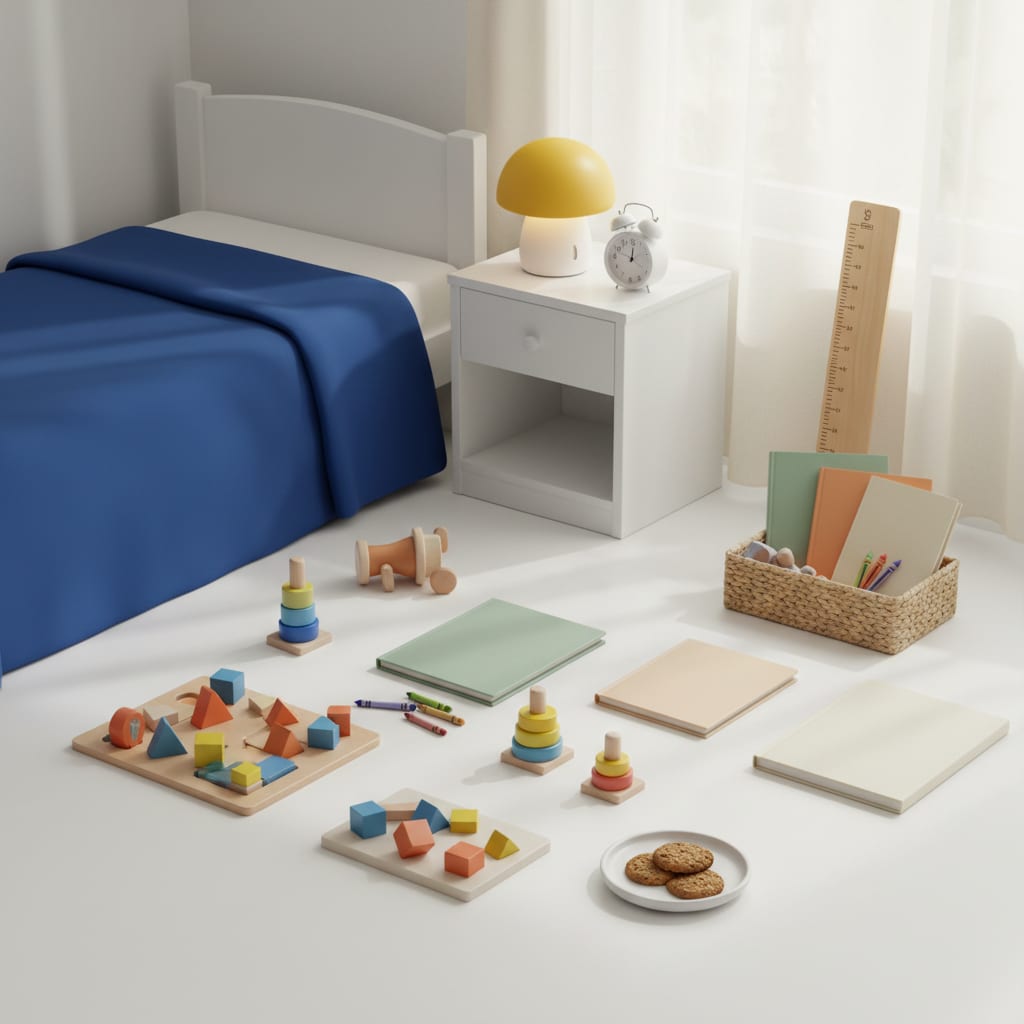
A 3.5 year old schedule is usually a no-nap day with a protected quiet hour in the middle: wake around 6:45–7:00, breakfast by 7:30, preschool or play through the morning, lunch at 11:45, quiet time from about 1:00 to 2:00, an active late afternoon, dinner at 5:15–5:30, and lights out between 6:45 and 7:30. Night sleep does the work now — most children this age get somewhere around ten to twelve hours in one stretch. The two things that make or break the day are an earlier bedtime than the napping year needed, and a quiet hour that’s treated as non-negotiable.
The shape of the day
| Time | Block |
|---|---|
| 6:45–7:00 | Wake |
| 7:30 | Breakfast |
| 8:15 | Preschool, playgroup or home play |
| 10:00 | Snack, then outside time |
| 11:45 | Lunch |
| 12:45 | Books, curtains down, transition into quiet time |
| 1:00–2:00 | Quiet time in their room |
| 2:15 | Snack |
| 2:45 | Outside time, park, bikes |
| 4:30 | Calm indoor play |
| 5:15–5:30 | Dinner |
| 6:15 | Bath and pajamas |
| 6:45–7:30 | Lights out |
Anchor this to your child’s real wake time rather than the clock times above. The structural rules underneath the grid: a full twelve-hour awake day needs a genuine midday downshift, dinner sits earlier than it did in the napping year, and bedtime lands roughly eleven to twelve and a half hours after the morning wake-up. If your 3.5-year-old is still napping most days, run the napping version of this day in the 3 year old schedule instead and come back when it fades.
The new bedtime math
The single biggest change from the 2.5 year old schedule is that the nap is no longer subsidizing the evening. When the nap goes, the sleep it provided doesn’t vanish — it has to be absorbed by an earlier bedtime, usually by thirty to sixty minutes. Families who keep the old 8:00pm bedtime after the nap ends generally get the same three symptoms: a fight at bath time, a very fast fall-asleep followed by a 5:30am waking, and a child who is impossible between four and six in the afternoon.
Two calibration notes. A 6:45pm bedtime is entirely normal in the post-nap year and is not “too early” — for many children it’s the setting that finally produces a full night. And if bedtime resistance grows worse after you move it earlier, you’ve probably overshot by more than an hour; walk it back in fifteen-minute steps rather than abandoning the change.
Quiet time, properly
Quiet time is the load-bearing element of this schedule. It’s not a nap in disguise and it isn’t a reward or a punishment — it’s a scheduled hour in which nothing is required and nobody is entertained.
- Same slot, same room, same hour. Right after lunch, in their own room, an hour. Consistency is most of the effect.
- A basket that only exists then. Puzzles, drawing, small figures, books, a rotating selection so it stays interesting. Nothing that needs an adult.
- A visible ending. A light or a visual timer like the Time Timer that signals the finish removes the negotiation entirely — the device is the authority, not you.
- Let sleep happen if it happens. Some quiet hours turn into naps, especially after a busy weekend. On those days, move bedtime later by roughly the length of the nap.
- Build the length gradually. Twenty minutes, then thirty, then an hour, over two or three weeks. Quiet time fails most often because it started at full size.
Field note: in preschool classrooms, rest time held together for one reason — every child got the same non-negotiable set-up and no child was asked to sleep. The moment adults started coaxing sleep out of a resistant four-year-old, the whole room came apart. At home the rule is the same: you can require the hour, you can’t require the sleep.
The afternoon window
The stretch from 2:15 to bedtime is now the longest and most fragile part of the day. What holds it together is physical output early and a steady downshift late: park, bikes or backyard by mid-afternoon, then genuinely calm play from about 4:30. Watch for the late-afternoon dip — the wobbly, weepy, everything-is-unfair patch around five — and treat it as a fuel-and-fatigue problem rather than a behavior problem. An early dinner, low demands and a predictable sequence get you through it; a new activity or an errand at 5pm rarely does.
Nights in the post-nap year
Night sleep gets consolidated and deep at 3.5, which is exactly why the disruptions that do appear can be startling. Two common ones. Bedtime fears genuinely arrive around this age as imagination develops — take them seriously, keep the response short and matter-of-fact, and add a small permanent fix (a dim night light like the GE SleepLite, a door left ajar) rather than a nightly debate. Confusional wakings and night terrors also peak in the preschool years: a child who sits up shouting an hour or two after falling asleep, isn’t really awake and doesn’t remember it in the morning is showing a different pattern from a nightmare, and Betteroo’s explainer is a good reference before you change anything.
The routine itself should be shorter and tighter than it was at two — same steps, same order, unambiguous last beat — per the toddler bedtime routine blueprint. And if you’re not sure whether your child has actually finished napping or is in a long strike, the signs are sorted out in when do toddlers stop napping. For a version of this day calculated from your child’s real wake time, Betteroo’s sleep plan quiz takes a few minutes.
Meals at 3.5
Three meals and two snacks, with a real gap before dinner so the meal has a chance. Appetite is usually steadier than it was at two, but the opinions are more articulate — this is the age of the confidently announced food policy. Structure still does the work: set times, food served family style, the adult choosing what and when. Keep the afternoon snack at 2:15 rather than 4:00, because a snack too close to an early dinner is the most common reason a 3.5-year-old “isn’t hungry” at 5:15 and then is starving at 6:45.
When to check with your pediatrician
Typical patterns, not your child specifically. Worth raising: snoring, mouth breathing or pauses in breathing during sleep; a child who seems exhausted despite a full night; night waking that has persisted for months; a return of frequent night waking after a long settled stretch; or sleep and daytime behavior that have declined together over weeks. Take a written week of times — it makes the conversation far more useful.
FAQ: 3.5 year old schedule
What time should a 3.5 year old go to bed?
Most land between 6:45 and 7:30pm once the nap is gone, roughly eleven to twelve and a half hours after their morning wake-up. If mornings start at 5:30, bedtime is usually too late rather than too early.
How much sleep does a 3.5 year old need?
Commonly somewhere around ten to twelve hours a night, with no nap. Ranges vary between children, so judge by how they hold up at five in the afternoon rather than by a target number.
Do 3.5 year olds still nap?
Some do, most are stopping. Occasional naps after a big day are normal and not a step backwards — just push bedtime later by roughly the length of the nap so the night still starts with enough sleep pressure.
My 3.5 year old won’t stay in their room at quiet time. What now?
Shorten it. Drop to twenty minutes for a week with the door open, keep the same slot and the same basket, and extend by ten minutes at a time. Quiet time is a skill that grows with practice, not something a child arrives able to do.
See also: nearby entries
Toddler Opening the Bedroom Door: What It Means
September 15, 2026
Toddler Needs to Hold Your Hand to Fall Asleep? What Helps
October 23, 2026
Toddler Grinding Teeth at Night: What It Means
September 7, 2026