Toddler Portion Sizes: How Much a 1 to 3 Year Old Eats
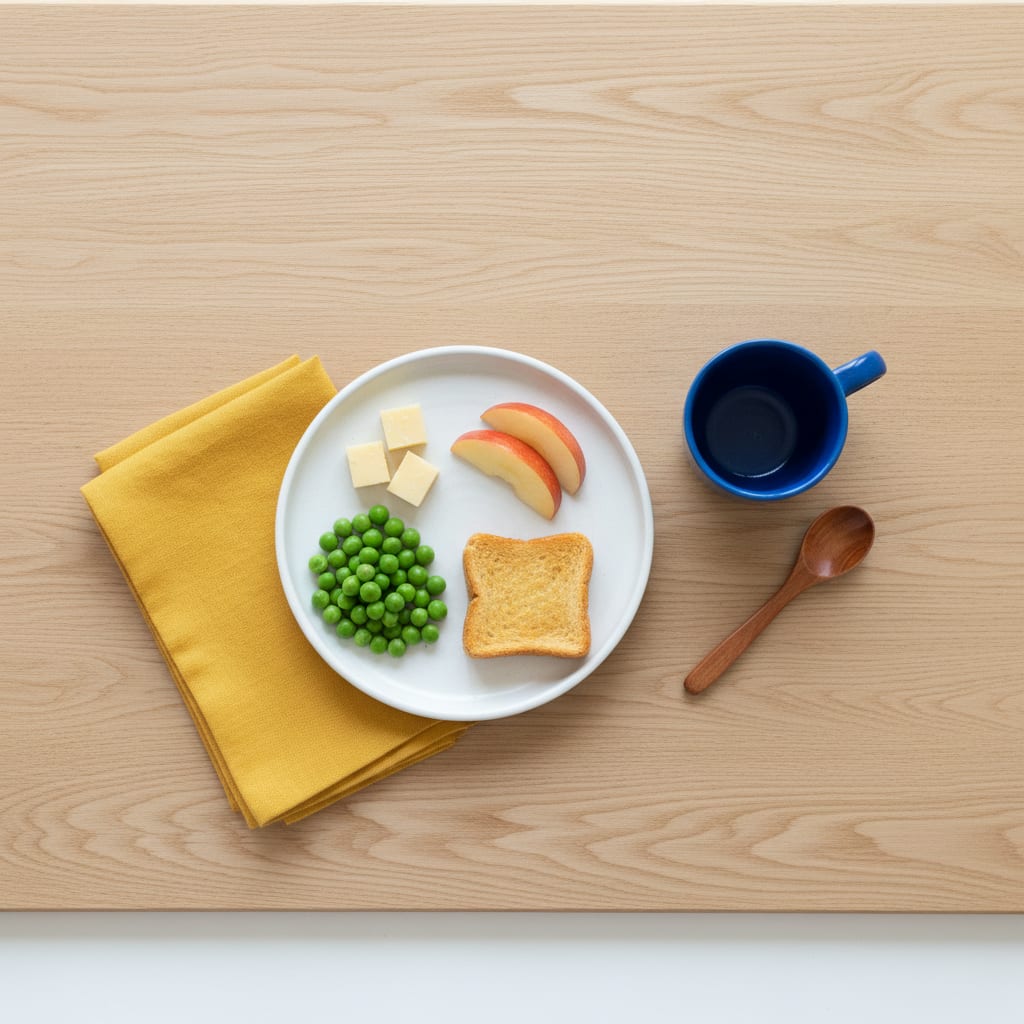
A toddler portion is much smaller than most parents expect. The American Academy of Pediatrics says a child’s serving size “should be approximately one-quarter of an adult’s,” and gives an average toddler meal as about one ounce of meat (or 2 to 3 tablespoons of beans), 1 to 2 tablespoons of vegetables, 1 to 2 tablespoons of fruit and a quarter slice of bread. Across a day that adds up to roughly 1,000 to 1,400 calories, depending on size and activity. Serve those amounts, offer more if your child asks, and let your child decide when they’ve had enough.
Why toddler portions are so small
Growth slows sharply after the first birthday. HealthyChildren.org puts it this way: after tripling their birth weight by their first birthday, a child’s growth slows down, “so, the amount they eat does not need to be huge.” KidsHealth says the same about appetite, which often drops as toddlers leave bottles and baby food behind: “That’s because growth slows during the second year of life.”
The AAP gives a rough energy guide: a child between one and three needs “about 40 calories for every inch of height” a day. By that guide, a 32-inch toddler needs about 1,300 calories. KidsHealth gives a range of about 1,000 to 1,400 calories a day, “depending on their age, size, and activity level.” Neither is a number to count against. They explain why a few spoonfuls can be a whole meal.
What one toddler serving looks like
This is the AAP’s table of average daily intake for a toddler, from its Serving Sizes for Toddlers page. It is a guide to the shape of a day, not a target for every meal.
| Food group | Servings a day | One serving |
|---|---|---|
| Grains | 6 | ¼ to ½ slice of bread; 4 tablespoons cooked cereal, rice or pasta; ¼ cup dry cereal; 1 to 2 crackers |
| Vegetables | 2 to 3 | Cooked vegetables, 1 tablespoon for each year of age |
| Fruits | 2 to 3 | ¼ cup cooked or canned fruit; ½ piece of fresh fruit |
| Dairy | 2 to 3 | ½ cup milk; ½ oz cheese (a 1-inch cube); ⅓ cup yogurt |
| Protein | 2 | 1 oz meat, fish, poultry or tofu (two 1-inch cubes, or 2 tablespoons ground meat); ½ egg |
| Legumes | 2 | 2 tablespoons soaked and cooked |
Two things in that table are easy to miss. A serving of vegetables grows with age, so a two-year-old’s is about 2 tablespoons. And six servings of grains sounds like a lot until you see that one serving can be a quarter slice of bread. The table also lists peanut butter as “smooth only,” spread thin on toast or a cracker, which is a choking precaution as much as a portion.
How much 2 and 3 year olds eat in a day
KidsHealth translates the USDA’s MyPlate guide into daily totals for two- and three-year-olds:
| Food group | 2-year-old | 3-year-old |
|---|---|---|
| Grains | 3 oz, half whole grain | 4–5 oz, half whole grain |
| Vegetables | 1 cup | 1½ cups |
| Fruits | 1 cup | 1–1½ cups |
| Milk | 2 cups | 2½ cups |
| Meat and beans | 2 oz | 3–4 oz |
KidsHealth explains how to read it: “When a range of amounts is given, the higher amount applies to kids who are older, bigger, or more active.” For children between 12 and 24 months, it says the two-year-old column “can serve as a guide,” but “younger toddlers may not be eating as much, at first.”
The conversions help. KidsHealth counts one ounce of grains as one slice of bread, a cup of ready-to-eat cereal, or half a cup of cooked rice or pasta. One ounce of meat and beans is an ounce of meat, poultry or fish, a quarter cup of cooked beans, or one egg.
Serve small, then let your child lead
Start with less than you think, and offer seconds. KidsHealth says “kids should be allowed to respond to their own feelings of hunger and fullness,” and lists the signs of a full toddler: they “may push food away, close their mouths or turn their heads away from food,” or use gestures and sounds to say they’re done. Its advice is direct: “Don’t push food on a child who’s not hungry.”
Three things make small portions work:
- Set the meal times. KidsHealth suggests three meals and two or three snacks a day. Set times give a toddler a chance to arrive hungry.
- Make the portion visible. A divided plate, like the OXO Tot Stick and Stay suction plate, keeps a tablespoon of peas and a tablespoon of fruit from disappearing into a big flat plate. Small amounts look like a meal, and a cleared section is an easy moment to offer more.
- Expect uneven days. KidsHealth says to “expect your toddler to sometimes eat less or skip meals.” A small dinner after a big lunch is normal.
When eating drops off at one meal in particular, the toddler won’t eat dinner entry covers the evening slump and the you-decide-what, they-decide-how-much approach. When the range of foods is what’s shrinking, picky eating by age explains what is typical at each stage.
Drinks count toward the day
Milk is food for a toddler, and it is the easiest way to fill up before a meal. KidsHealth suggests limiting milk to “about 16 ounces a day (2 cups)” from 12 to 24 months, and to “16 to 24 ounces (2 to 3 cups) a day” after two. It also warns that toddlers “who drink too much cow’s milk may be less hungry and less likely to eat iron-rich foods.” The full by-age guide is in how much milk a toddler should drink.
Juice counts as well. The AAP’s table gives a serving as ¼ to ½ cup (2 to 4 ounces), and its drinks guidance says no more than 4 ounces a day for two- and three-year-olds. Water is the drink between meals.
When to ask your pediatrician
Small portions are normal. A pattern that keeps going is worth raising at a checkup, or sooner if:
- your child’s growth or weight has been flagged
- the list of foods your child accepts keeps getting shorter
- your child seems tired, unwell or low on energy along with eating little
- milk or juice seems to be replacing meals
- you’re worried about a food allergy or a child who gags or struggles to chew
Bring a two- or three-day food log. It shows more than a description of one bad day. This is general information, not medical advice.
FAQ: toddler portion sizes
How much should a 1 year old eat at a meal?
Less than the two-year-old amounts. KidsHealth says the two-year-old guide can be used from 12 months but younger toddlers “may not be eating as much, at first.” In practice that is a few tablespoons of each food, with more on offer.
How much should a 2 year old eat in a day?
The MyPlate figures KidsHealth gives for a two-year-old are about 3 ounces of grains, 1 cup of vegetables, 1 cup of fruit, 2 cups of milk and 2 ounces of meat and beans, spread across meals and snacks.
Is it normal for my toddler to eat one good meal a day?
Often, yes. KidsHealth says to expect toddlers to sometimes eat less or skip meals. Look at the whole week and your child’s energy and growth rather than one day.
Should I make my toddler finish their plate?
No. Serve a small portion, offer more if they ask, and stop when they show they’re full. Pushing food on a child who isn’t hungry is the thing KidsHealth advises against.
See also: nearby entries
18 Month Sleep Regression: Signs, Causes & What to Do
July 17, 2026
Toddler Waking Up at Night: Causes by Age
July 17, 2026
14 Month Old Schedule (With Nap Transition Notes)
July 19, 2026