How Much Milk Should a Toddler Drink? By Age
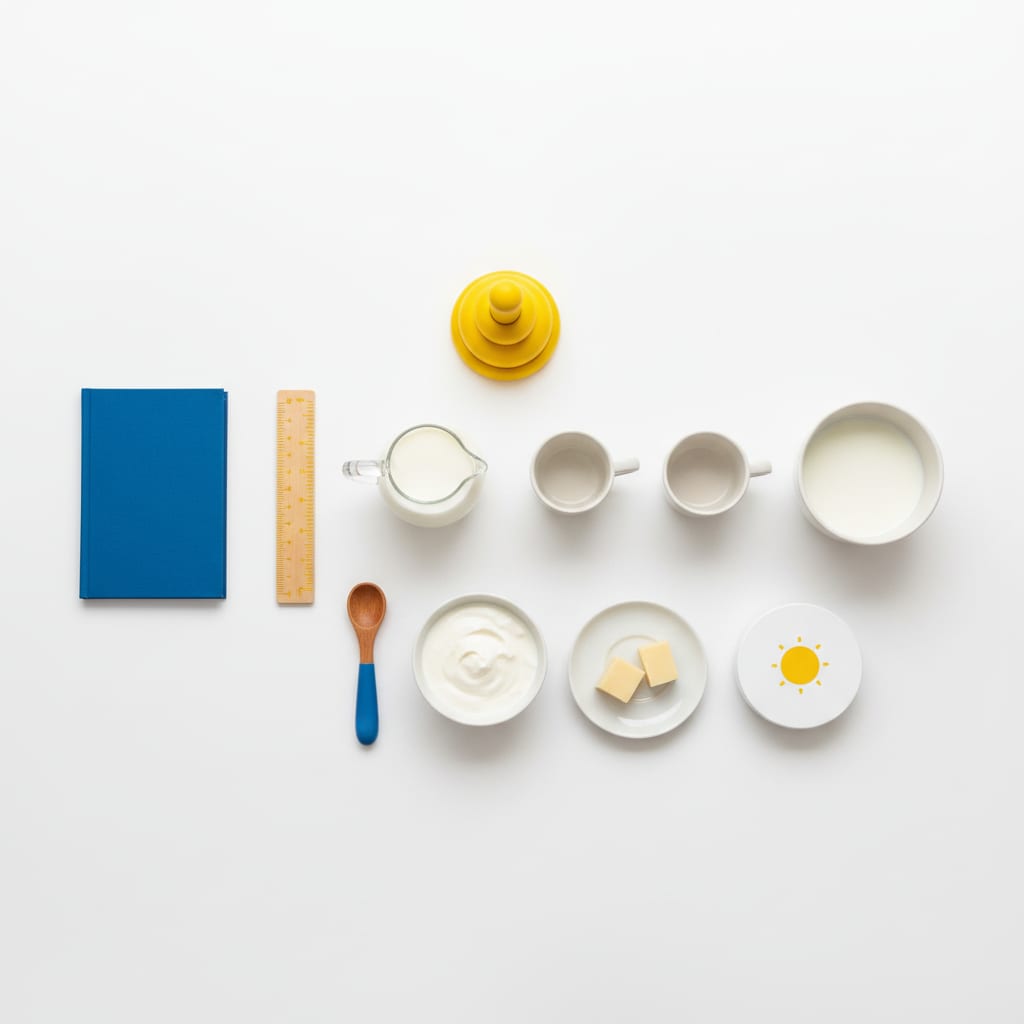
The American Academy of Pediatrics suggests about 16 ounces (2 cups) of whole milk a day from 12 to 24 months, and 16 to 24 ounces (2 to 3 cups) of skim or low-fat milk a day from two to five, alongside water. Those are guides for the population, not a prescription for your child, and there is an upper limit as well as a lower one. Your pediatrician’s number for your child is the one that counts.
Why milk gets a range and not a target
Milk is a convenient package of calories, fat, calcium and vitamin D, and also a filling drink that competes with food. Too little and a picky eater may miss what milk carries well; too much and it displaces the meals it was meant to supplement.
The upper bound has a reason beyond appetite. KidsHealth explains that “cow’s milk is low in iron,” that toddlers who drink too much of it “may be less hungry and less likely to eat iron-rich foods,” and that milk “decreases the absorption of iron.” What a large intake means for your child depends on their diet and growth, which is your pediatrician’s call.
By age
Twelve to twenty-four months. This is the transition year. The AAP advises whole milk for this age unless your pediatrician has said otherwise, because toddlers need the fat. Its table gives about 16 ounces (2 cups) a day. Milk moves from being a primary food to being one part of three meals and two snacks.
Two to three. The AAP’s table gives 16 to 24 ounces (2 to 3 cups) a day, and advises nonfat (skim) or low-fat (1%) milk from two. Whether and when your child makes that switch depends on growth and the rest of the diet, so put it on the list for the two-year checkup.
Across the whole span, the pattern matters more than the total. Milk at meals and one snack is a food; milk sipped all day from a cup carried around the house suppresses hunger and keeps teeth bathed in milk sugar.
How to switch from formula to whole milk
The switch usually happens around the first birthday. The NHS says formula milks, including toddler and growing-up milks, “are not needed once your baby is 12 months old,” and the AAP calls toddler milks “unnecessary.” Cleveland Clinic pediatrician Radhai Prabhakaran describes two ways to make the change:
- If your child takes to milk, “start offering a 2- to 4-ounce serving of milk for every two or three servings of formula,” then over the next week or so increase the milk and decrease the formula. Stop the formula once milk is going down with no issues.
- If your child prefers formula, make the formula as usual and add a little milk to the prepared bottle. Don’t add cow’s milk to the formula powder. In a 4-ounce bottle, that might start at 3 ounces of formula and 1 ounce of milk. Raise the milk share as your child accepts the taste, until it is all milk.
Slow down and call your pediatrician if you see stuffiness or a big change in stools. Cleveland Clinic lists constipation, diarrhea, rash and vomiting as signs a child may not tolerate cow’s milk. It also says some children should stay on formula for now: those not gaining weight, those without an established diet of solid foods, and those with certain medical conditions.
The bottle is the other half of the switch. Cleveland Clinic suggests moving to a sippy, straw or open cup at the same time, and the bedtime bottle entry covers the hardest bottle to drop.
If you are breastfeeding, cow’s milk can be added in a cup from 12 months without stopping. The NHS notes that the World Health Organization recommends breastfeeding for up to two years or longer.
How much water a toddler should drink
Water is the drink between meals, and the AAP gives a range for it too:
| Age | Water a day (AAP) | Cow’s milk a day (AAP) |
|---|---|---|
| 12 to 24 months | 8 to 32 oz (1 to 4 cups) | 16 oz (2 cups), whole |
| 2 to 5 years | 8 to 40 oz (1 to 5 cups) | 16 to 24 oz (2 to 3 cups), skim or 1% |
The range is wide, and children vary within it. Offer water with snacks and between meals in an open or straw cup. Where tap water is fluoridated, the AAP notes that drinking it also helps prevent tooth decay. Juice is not needed; if you give it, the AAP says no more than 4 ounces a day for two- and three-year-olds.
The four habits that matter more than the number
- Milk with meals, water in between. Milk arrives with breakfast, with dinner, or at a snack; water is the between-meals drink.
- Cup, not bottle. The NHS says that once a baby is a year old, bottle feeding should be discouraged. A bottle makes it easy to drink far more than anyone intended, and open or straw cups slow the volume down.
- Serve it, don’t top it up. Pour a small amount and let it be finished. A cup that is refilled every time it empties has no ceiling on it.
- Don’t use milk to end a standoff. Offering a bottle of milk because dinner was refused teaches a loop that gets harder to unpick each week. The division-of-responsibility approach — you choose what and when, they choose whether and how much — applies to drinks exactly as it does to food.
Watch the night bottle, the easiest way for a toddler to drink well over the guidance without anyone noticing. If your child wakes to feed, night weaning is a sleep project more than a nutrition one, and Betteroo’s walkthrough of night weaning covers how to unwind it gradually. Where milk sits in a normal day, alongside meals and snacks, is mapped out in the 2 year old schedule.
What about non-dairy milks?
The AAP says “most plant-based milks are not nutritionally-equivalent to cow’s milk,” and that soy milk “is nutritionally equivalent to cow’s milk and is an acceptable alternative.” If your child can’t have dairy, or your family doesn’t use it, ask your pediatrician or a pediatric dietitian what the rest of the diet needs to cover.
When to check with your pediatrician
Bring milk up at any checkup, and sooner if your toddler drinks far more or less than the ranges above, refuses milk and you’re unsure what replaces it, shows signs of intolerance such as rash, vomiting or stool changes after milk, has had growth or weight flagged, or can’t shift a bottle habit. This is general information, not medical advice.
FAQ: how much milk should a toddler drink?
How much milk should a 1 year old drink?
The AAP suggests about 16 ounces (2 cups) of whole milk a day from 12 to 24 months, spread across meals and a snack rather than sipped all day. Confirm the amount with your pediatrician, because it depends on what else your child eats.
Is my toddler drinking too much milk?
If milk is displacing meals — eager cup, refused plate — the volume is likely too high for your child regardless of what the number says. Bring a two-day intake log to your pediatrician rather than making a large change on your own.
When should a toddler stop drinking whole milk?
The AAP advises whole milk from 12 to 24 months and nonfat or low-fat milk from two. The timing for your child depends on growth and diet, so ask at the two-year checkup.
My toddler refuses milk entirely — is that a problem?
Not necessarily. Milk is a convenient source of calcium, vitamin D and fat, not the only one — yoghurt, cheese and fortified foods contribute too. Tell your pediatrician what your child does eat and let them judge whether anything needs supplementing.
Should I let my toddler have milk before bed?
A cup of milk as part of the wind-down is fine for many families, ideally followed by teeth-brushing. What causes trouble is milk in the bed or a bottle used to fall asleep, which tends to build a night-waking habit — and, if throwing has become part of the routine, the same handling as thrown food applies to the cup.
See also: nearby entries
Toddler Stopped Napping Too Soon: What to Do Now
August 27, 2026
Toddler Sleep With Hearing Aids or a Cochlear Implant
August 31, 2026
3.5 Year Old Schedule: Life After Naps
July 27, 2026