Sleep · Entry
Toddler Sleeps With Blanket Over Face: What's Safe After 1
Why toddlers pull the blanket over their face, what AAP, NIH and NHS guidance says before and after the first birthday, and how to make a covered head safer.
A toddler who sleeps with the blanket pulled over their face is very common, and after the first birthday it is not treated the way it is for a baby. The strict “nothing in the crib” rules from the AAP, the NIH Safe to Sleep campaign and the NHS are written for babies up to 12 months. None of them publishes a separate blanket rule for toddlers, so there is no official line saying a covered face is safe, and none saying it is forbidden. What you can control is the setup: one small, light blanket, no pile of soft bedding, a cool room and a child who moves freely in their sleep.
What the guidance says, and where it stops
For babies, the rule is clear and it is the same on both sides of the Atlantic.
- The AAP, on its HealthyChildren parent site, says to keep soft objects and loose bedding out of the sleep area because they “can increase your baby’s risk of entrapment, suffocation or strangulation”. Its list includes “pillows and pillow-like toys, quilts, comforters, mattress toppers, non-fitted sheets, blankets”. The page then states: “Unless mentioned otherwise, all these recommendations are for babies up to 1 year of age.”
- The NIH Safe to Sleep campaign says: “Keep comforters, quilts, pillows, and blankets out of baby’s sleep area.” Its list of things to keep out includes anything “Non-fitted, even if lightweight, small, or “tucked in””, with tucked-in blankets given as an example.
- The NHS says to keep a baby’s cot “clear of anything that could cover their face and head”. The Lullaby Trust says “there is evidence to suggest that babies are at a higher risk of sudden infant death syndrome (SIDS) if they have their heads covered”, and asks parents to follow its safer sleep advice “until your baby is 12 months old (or 12 months after their due date for premature or low birth weight babies)”.
So if your child is under one, or under one corrected age if they were born early, the answer is simple. No loose blanket, and a covered head is something to fix. A wearable blanket or sleep bag keeps them warm instead.
After the first birthday, those pages stop. They do not say blankets become safe at 12 months; they say their advice was written for babies, which is why so many different ages get quoted elsewhere. Our first pillow entry covers the same gap for pillows.
Why the rules ease after the first year
The reasons the baby rules exist explain why toddlers are treated differently. The AAP says a baby “could roll into any of these items, which could block their airflow”. A young baby who ends up with a blanket across their face may not be able to move it or move away from it.
By the second year, most children can roll, sit up, kick bedding off and pull it back on. That ability to reposition, not the date on a birthday card, is what most toddler advice hangs on.
It is also why a few children need a different answer. If your toddler has a condition that affects their movement, muscle tone or breathing, ask your pediatrician what is right for them rather than going by age.
Why toddlers pull the blanket over their face
From a development point of view, burrowing makes sense:
- It is dark under there. A blanket blocks the hall light, the night-light and early sunrise. Many toddlers who cover their face are simply making the room darker.
- It is a comfort habit. Rubbing a blanket edge on the cheek or nose is a common way toddlers settle themselves.
- It is a hiding place. Imagination grows fast in the second and third years, and with it new worries at night. Our fear of the dark entry explains why that starts and how to answer it.
- The room is cold. A child who is chilly will pull everything up, head included.
None of these is a problem in itself, and two of them, a cold room and a bright light, are easy to change.
How to make a covered head safer
You don’t need to stop a toddler burrowing. These steps make it lower-risk.
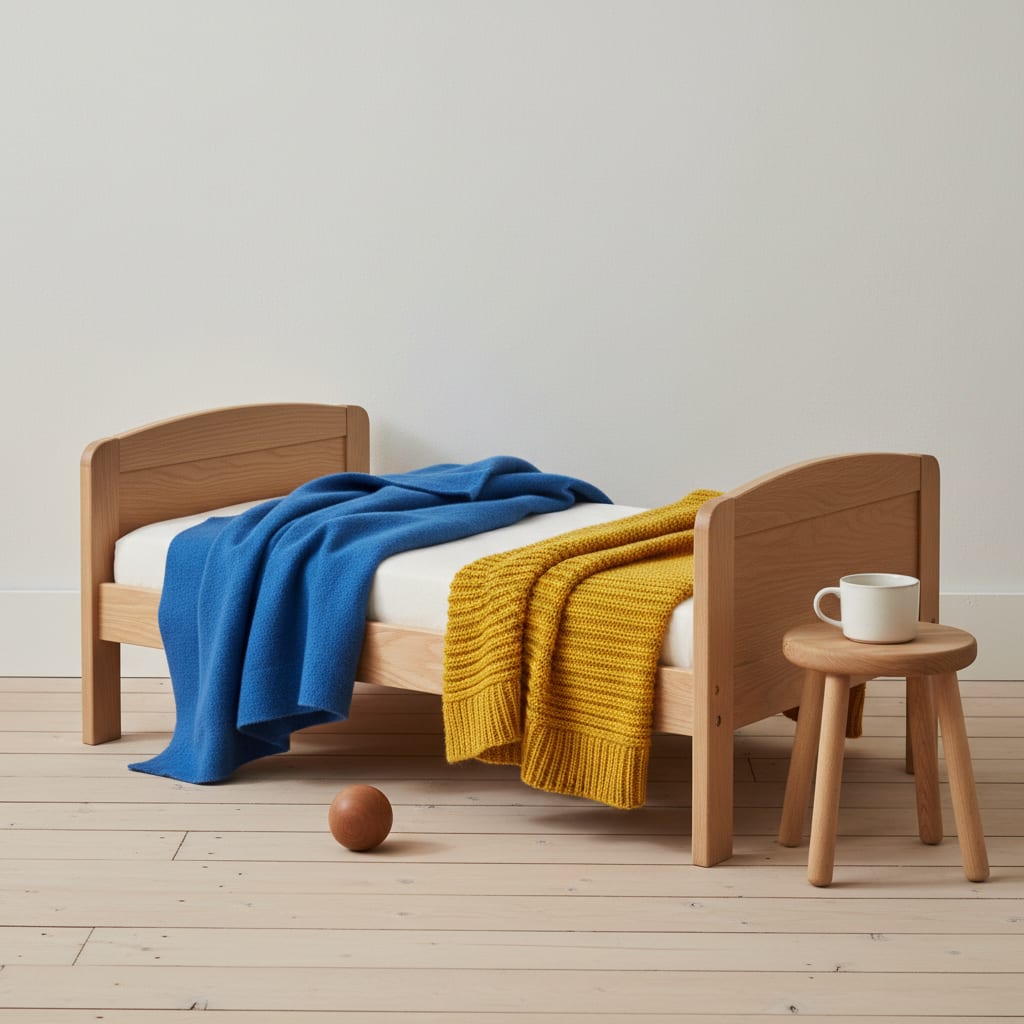
- Use one small, light blanket. A toddler-sized blanket in a breathable cotton or cellular weave is easier to push off than a full-size throw. Skip duvets and heavy quilts in a cot.
- Keep the cot otherwise plain. A pile of cushions or soft toys gives a burrowing child more to end up under.
- Keep weighted blankets out unless your child’s doctor has advised one. A heavy layer is harder to push away, which is the whole point of the advice above.
- Keep the room cool. About 68 to 72°F (20 to 22°C) suits most children. Dress them so they are warm without needing the blanket over their head. NIH Safe to Sleep lists signs a baby is too hot: “sweating, flushing/red or hot skin, or baby’s chest feeling hot to the touch”. The same checks work for a toddler.
- Darken the room another way. If the blanket is a light blocker, a blackout blind or dimmer night-light may take away the reason for it.
- Fold it down when you check on them. If you look in and their face is covered, folding the blanket down to the shoulders without waking them is fine.
A sleep bag instead of a blanket
If a covered face worries you, there is nothing wrong with keeping your toddler in a sleep bag for longer. Sleep bags come in toddler sizes and in different weights (TOG ratings) for warm and cool rooms. A lightweight cotton one such as the HALO SleepSack toddler sleeping bag leaves the arms free and cannot ride up over the head.
Many families move to a blanket around the time of the crib to toddler bed switch, when a sleep bag starts to make climbing in and out awkward. Betteroo has notes on when families usually retire the sleep bag, and a separate explainer on why the first-year rule is as strict as it is.
 Cross-reference
Nights that need more than a bedding fix
Betteroo builds a sleep plan for children from newborn to age 6 around your child's bedtime, naps and night waking, with coaching when a stretch gets hard.
Take the free 3-minute quiz →
When to talk to your pediatrician
A burrowing habit on its own is not a reason for a visit. These are:
- your child snores loudly or breathes noisily most nights
- they wake gasping or seem to struggle for breath in sleep
- they sweat heavily at night even in a cool room
- they have a condition that affects movement, muscle tone or breathing
- your child is under 12 months, or under 12 months corrected age, and keeps ending up with their head covered
Field note: at nap time in my toddler rooms, the cots had one light blanket each, and by the end of the hour half the children had it over their heads like a tent. The ones who did it every day were nearly always the ones nearest the window. Moving them to the darker side of the room did more than any amount of tucking.
FAQ
Is it safe for my 1 year old to sleep with a blanket over their face?
The AAP, NIH and NHS rules on loose bedding are written for babies up to 12 months, and none sets a separate toddler rule. For a healthy toddler who moves freely, one light blanket in a cool room is the usual approach.
At what age can a toddler sleep with a blanket?
Official safe-sleep guidance covers the first year only, so there is no official age after that. Many families add one small blanket after the first birthday; others wait until the move to a bed.
Should I pull the blanket off my toddler’s face?
If you are checking on them anyway, folding it down to the shoulders is fine. If they pull it straight back up, it is a comfort or darkness preference.