Toddler's First Pillow: When They're Ready and What Changes
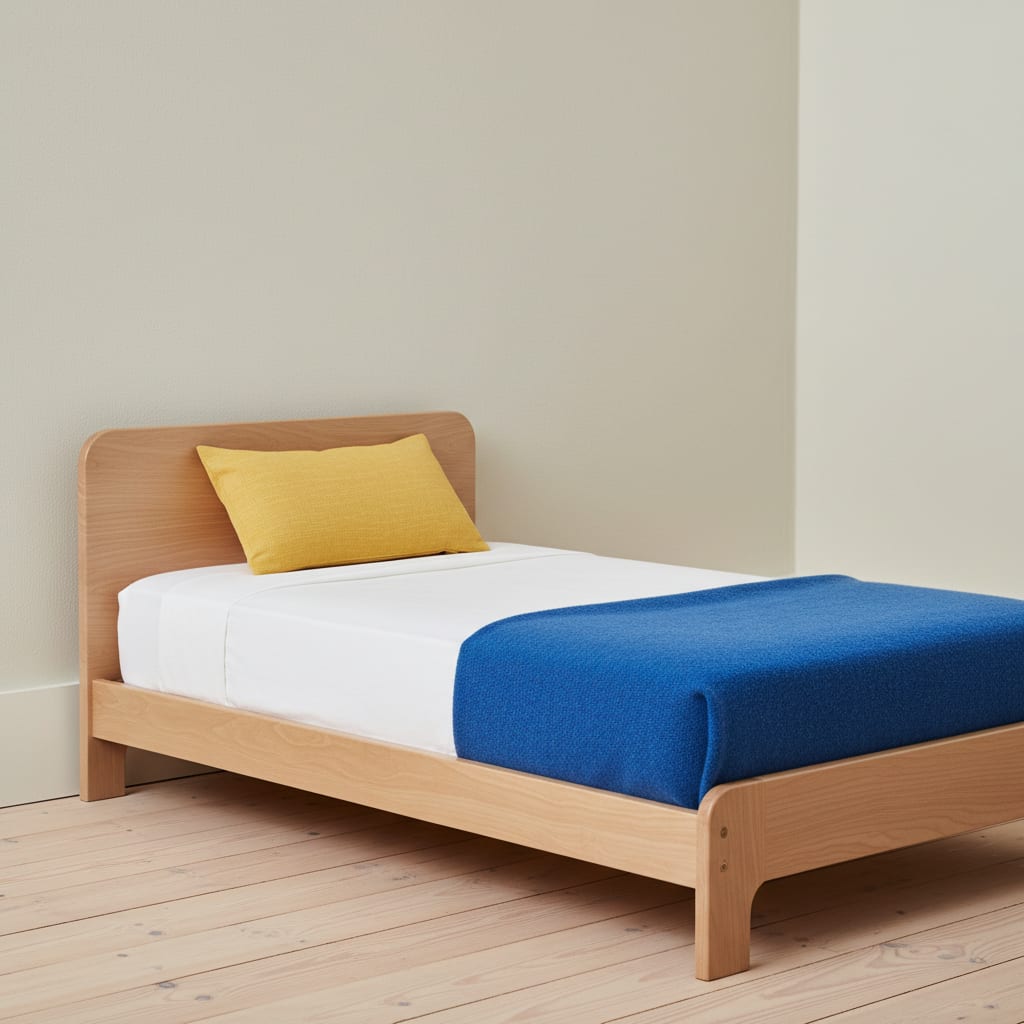
A toddler is ready for a first pillow when three things line up: they are well past their first birthday, they sleep in a bed rather than a crib, and they move freely in their sleep. Before twelve months the answer is a flat no, because the AAP’s safe-sleep guidance keeps pillows out of a baby’s sleep space. After that, a pillow is optional rather than needed, and the line most pediatric sources repeat is to wait until around age two. When it does arrive, it should be small, flat and firm, and it is best added a week or two after the move to a bed.
What the guidance actually says, and what it doesn’t
The firm rule covers the first year. HealthyChildren.org, the AAP’s parent site, lists the soft objects to keep out of a baby’s sleep area, “pillows and pillow-like toys, quilts, comforters, mattress toppers, non-fitted sheets, blankets, toys, bumper pads”, and notes that its recommendations “are for babies up to 1 year of age.” The NIH Safe to Sleep campaign says the same thing in fewer words: “Keep comforters, quilts, pillows, and blankets out of baby’s sleep area.” Betteroo’s explainer on why the bare-crib rule holds for twelve months walks through the reasons in more detail.
Past the first birthday, the official picture gets thinner. Huckleberry and WebMD both state that the AAP advises no pillow before age two, and both cite a 2007 AAP News article as the source. That article is not publicly readable online, so it can’t be quoted here. What we can say is that the age-two line is the one parents will meet everywhere, and that no source we read argues for an earlier pillow. Nothing in the guidance says a two-year-old needs one, either. Plenty of children sleep flat on a mattress until school age and are perfectly comfortable.
Readiness signs that matter more than the birthday
Age gets you to the question. These signs answer it:
- They sleep in a bed, not a crib. A pillow in a crib does nothing for comfort and gives a climber a step. If the crib is still in use, so is the bare mattress. The move itself is covered in the crib to toddler bed entry.
- They reposition freely in sleep. A child who rolls, scoots to the foot of the bed and ends up sideways by morning is a child who can move away from anything near their face. Huckleberry lists “the ability to move pillows or blankets away from their face during sleep” among its readiness signs.
- They are making a bid for one. Older siblings, a grandparent’s guest bed or a picture book can all prompt the request. Asking for a pillow is a fine reason to consider one at two and a half. It isn’t a reason at eighteen months.
- They already rest their head on something. A toddler who sleeps with their cheek on a folded arm or a lovey is often showing you the position a pillow would support.
If the honest answer to those is “not yet”, there is nothing to fix. A toddler without a pillow is not missing anything.
Field note: at nap time in the toddler rooms, the children slept on flat cots with a sheet, and the request for a pillow almost always came from the child who had just started sleeping in a big bed at home.
What a first pillow should be
Small, flat and firm is the whole specification. An adult pillow is tall enough to tip a small child’s head forward, toward the chest. A pillow sized for a toddler, around 13 by 18 inches and only a few inches high, keeps the head close to the mattress. Something like the Little Sleepy Head toddler pillow is the shape to look for.
Skip the things that look cosy in a shop: decorative cushions, memory-foam wedges, and anything plush enough to fold around a face. A wedge is especially worth avoiding. Raising a child’s head is not a fix for a cold, reflux or snoring, and any of those is a pediatrician question rather than a bedding one.
What a pillow changes at night
The pillow adds a new object to the bed, and toddlers treat new objects the way they treat everything else:
- It becomes part of the routine. “Where’s my pillow?” can turn into a new bedtime step, and a new step can turn into a new way to stall. Give it a fixed place in the sequence, and hold the same line you would on any other request. The bedtime stalling entry covers the scripts.
- It will not stay under their head. Most toddlers roll off a pillow within the hour and wake up with it at the foot of the bed or on the floor. That is normal. It does not need to be put back.
- It can be thrown or carried. A pillow lobbed out at 9pm is a game rather than a sleep problem. Hand it back once, calmly, and then leave it where it lands.
- It is a step for a climber. A child who uses everything in the room as furniture will use the pillow too. The climber-proof bedroom entry has the rest of that checklist.
- It changes the temperature. A pillow traps a little warmth around the head, which matters most in a hot room. Light bedding and a cool room cover it.
How to introduce it
Change one thing at a time. If the pillow arrives on the same night as the bed, any rough night has two possible causes and you can’t tell which. Let the bed settle for a week or two, as the first night in a toddler bed entry suggests, then add the pillow. A nap is a low-stakes first trial.
Let your child choose something small, like which of two plain pillowcases goes on it. A choice between two options gives them ownership without opening a negotiation. Then put it at the head of the bed, say nothing more about it, and let them use it or ignore it.
When to check with your pediatrician
A pillow should never be the answer to a breathing or sleep problem. Nemours KidsHealth tells parents to talk to the doctor if a child “snores regularly” or “is a restless sleeper”, among other signs of obstructive sleep apnea. If you notice your child propping their head up, sleeping with their neck stretched back, or breathing noisily most nights, raise it at the next visit rather than adding a pillow. The same goes for a child under two whom someone has suggested should sleep elevated: ask first. None of this is medical advice; it’s a well-organized head start for that conversation.
FAQ: a toddler’s first pillow
Can my 18-month-old have a pillow?
The rule for babies ends at twelve months, but most pediatric sources still suggest waiting until around two, and at eighteen months most children are still in a crib, where a pillow only adds something to climb on. There is no benefit to rushing it.
Does a toddler need a pillow at all?
No. A flat mattress is comfortable for most toddlers, and many sleep without a pillow well into the preschool years. A pillow is optional. Add one when your child is ready and wants one.
Should the pillow go in the crib once they turn two?
Not if they are still climbing or standing in the crib. The bed move is the natural point for a pillow. Until then, the crib stays a fitted sheet and a small comfort object.
My toddler keeps sleeping with their head off the pillow. Is that a problem?
No. Toddlers move a lot in sleep, and most end up nowhere near the pillow by morning. There is no need to reposition them.
See also: nearby entries
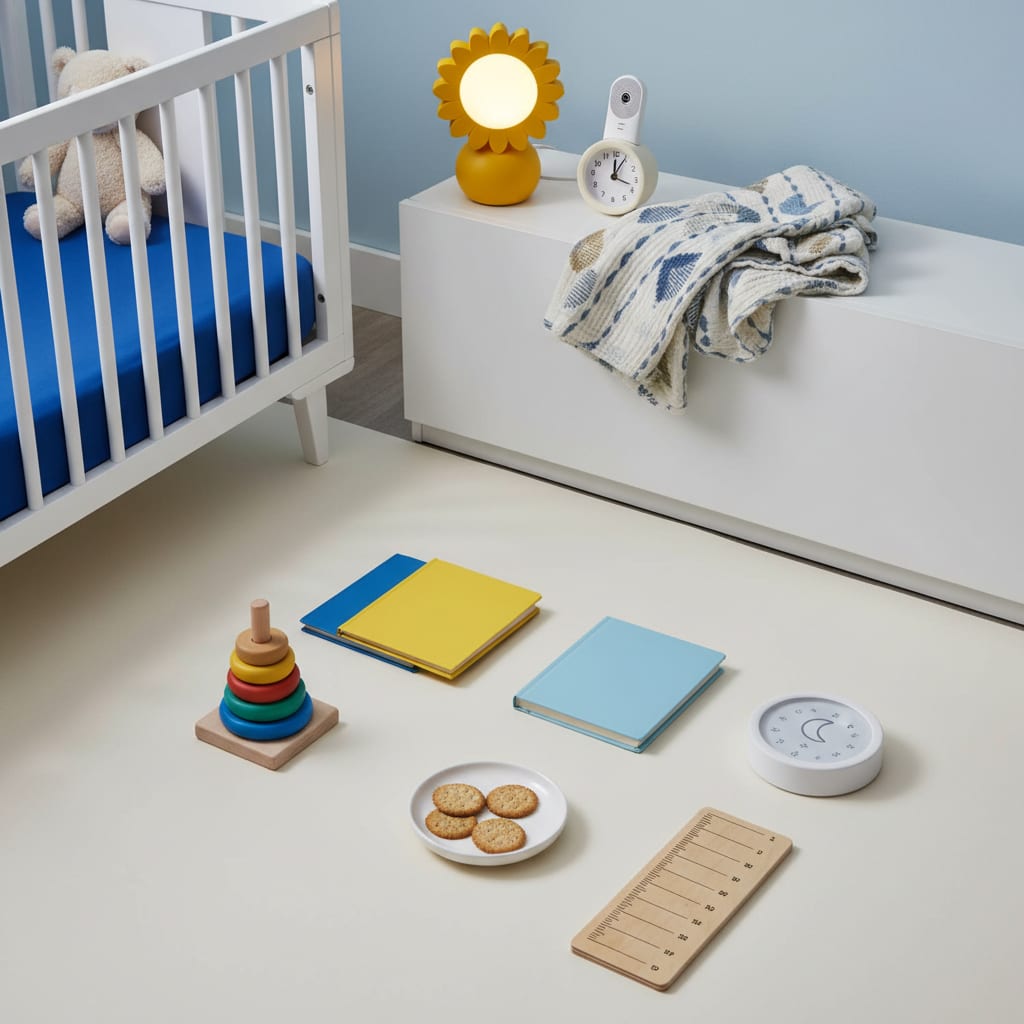
18 Month Sleep Regression: Signs, Causes & What to Do
July 17, 2026
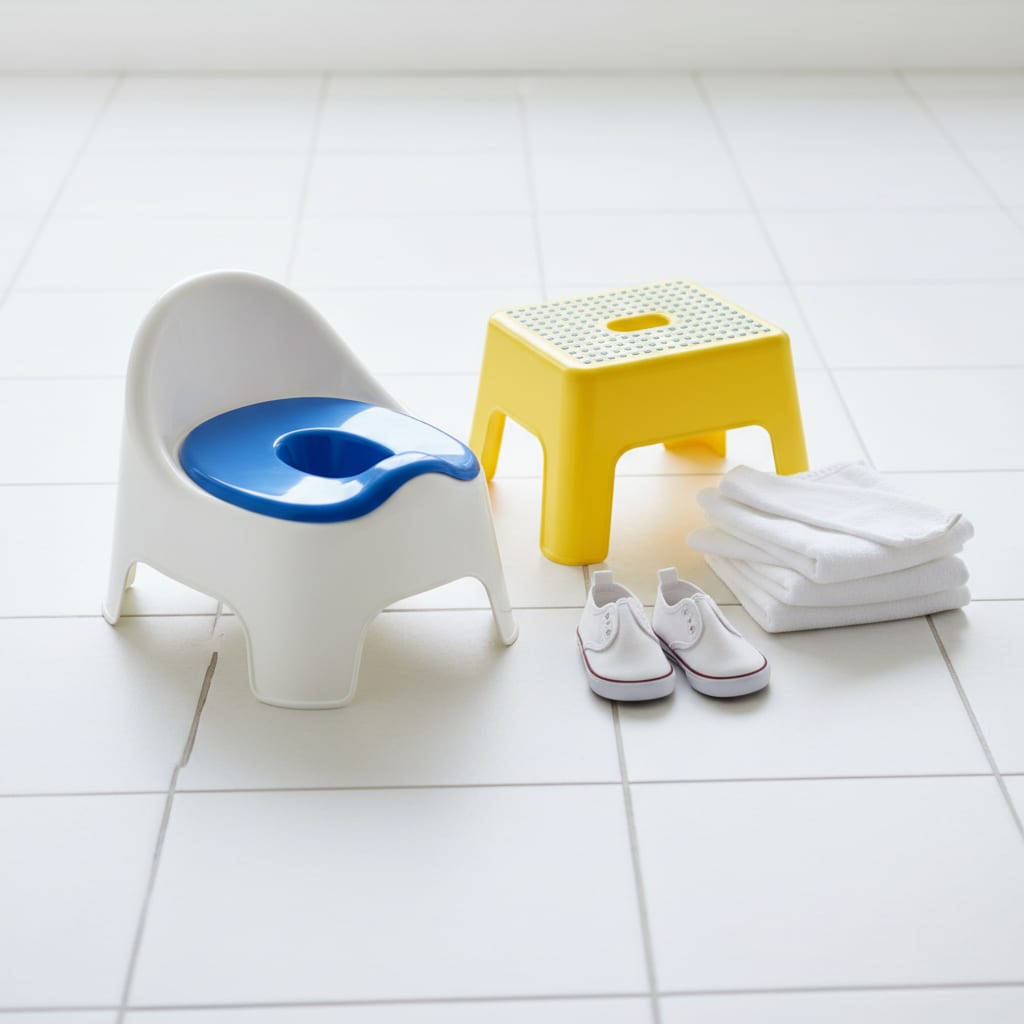
Potty Training Readiness: What's Actually Developing
August 7, 2026
Weaning Off the Bedtime Bottle: A Gentle 12–18 Month Plan
September 27, 2026