Sleep · Entry
"My Tummy Hurts" at Bedtime: Ache, Worry or Stalling?
When a toddler says "my tummy hurts" at bedtime: how to tell a real ache from a worry or a stall, a five-minute check, and when to call the doctor.
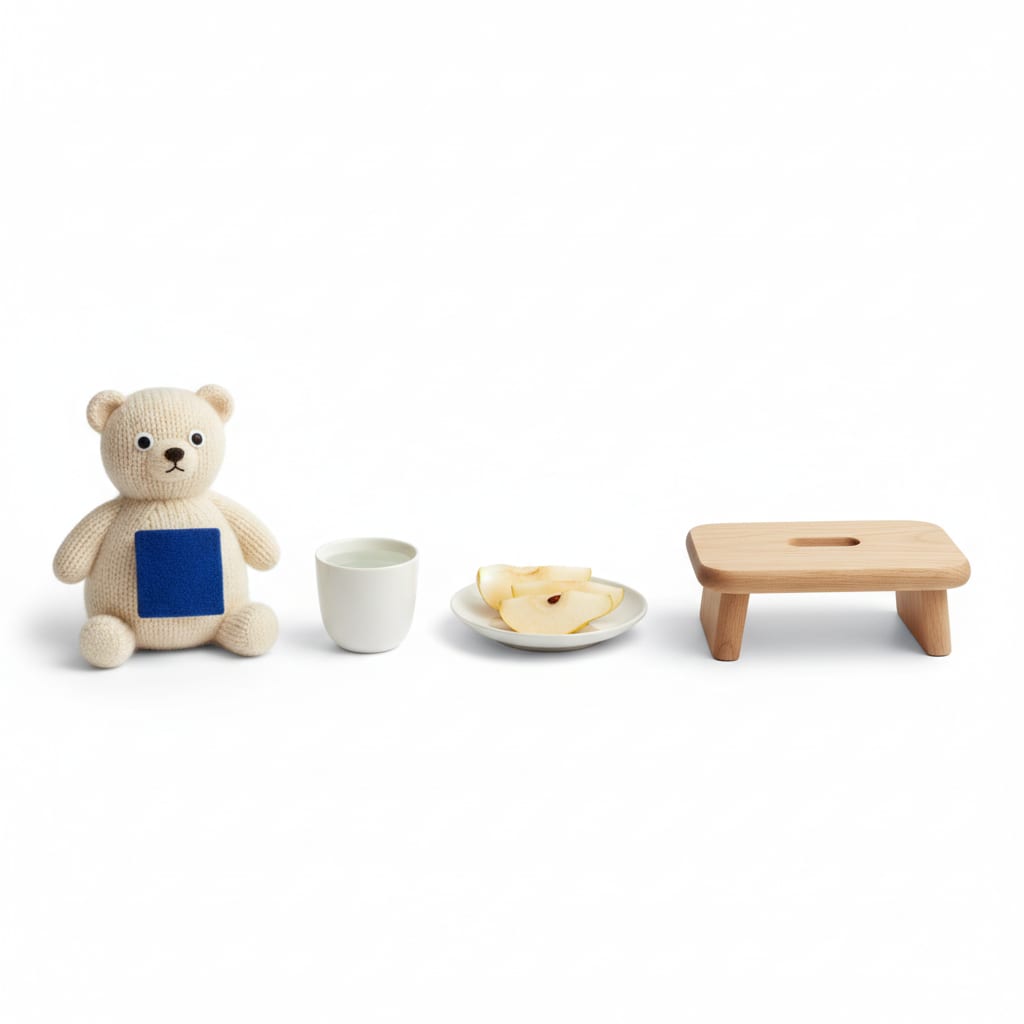
When a toddler says “my tummy hurts” at bedtime, it is usually one of three things: a real but minor ache (constipation, hunger, too much dinner or the start of a stomach bug), a worry that is being felt in the belly, or a way to stay up a little longer. You often can’t tell which in the moment. Treat every complaint as real for five minutes: a look, a trip to the toilet, a sip of water and a calm tuck-in. Then watch the pattern over a week. Pain that is severe, constant or comes with fever or vomiting needs the doctor tonight.
This entry is written for ages 2 to 3.5 years.
Why “tummy” covers so much at this age
A young child’s body vocabulary is small. The symptom checker on the AAP’s HealthyChildren site, in its guide to abdominal pain, notes that “younger children may complain of stomach pain when they are hungry” and that they “often talk about stomach pain when they have nausea.” Needing to poop, being overfull and feeling nervous can all come out as the same three words.
Real ache, worry or stalling: the clues
| A real ache | A worry | A stall | |
|---|---|---|---|
| When it shows up | Any time of day, including during play | Bedtime, daycare drop-off, before something new | Only after lights-out |
| What your child looks like | Quiet, curled up, off their food, holding the belly | Clingy, wants you close, otherwise looks well | Cheerful, chatty, recovers when you stay |
| What else is going on | Hard or missed poops, fever, vomiting, diarrhea, pain when peeing | A change at home, a new room at daycare, a parent away | The complaint follows the water, the extra book and the “one more hug” |
The three overlap. A constipated toddler who has learned that “tummy hurts” brings you back will use it on the nights it doesn’t hurt, too.
The real aches that turn up at bedtime
- Constipation. The AAP calls it “a common cause of pain in older children, especially in the lower part of the abdomen.” Its constipation guide explains that children aged 2 to 5 often hold stools back, sometimes because a hard one hurt and sometimes because they “don’t want to stop playing to go to the bathroom.” The guide adds that children “can become constipated during toilet training.” Count the days since the last soft poop.
- Hunger, or too much too late. A toddler who ate three bites at 5:00 may be hungry by 7:30. The symptom checker also lists eating too much as a cause of “mild stomach pain,” and KidsHealth’s stomachache page suggests families “try not to eat right before going to sleep.”
- The start of a stomach bug. “Sometimes, stomach pain signals the start of a viral infection,” the symptom checker says.
- A urinary tract infection. The AAP notes UTIs are “much more common in 1- to 5-year-old children, especially girls, than in infants.” Signs include pain or burning when peeing and new wetting.
- Strep throat, which the AAP says can bring abdominal pain along with a sore throat and fever in children over 2.
Appendicitis is the cause parents fear. The AAP’s page on abdominal pain in children calls it “very rare in children under age 3 and uncommon under 5 years old.” Its warning signs are listed below. Leg aches at night are a separate subject, covered in growing pains at night.
When it’s a worry
The symptom checker says of stress-related stomach pain: “The pain is real.” KidsHealth agrees that anxious children’s “emotions can trigger physical symptoms, such as headaches or abdominal pain.”
Two cautions keep this in proportion for toddlers. The AAP says pain from emotional upset “rarely occurs before age 5,” though “it can happen to a younger child who is under unusual stress.” And the symptom checker says a child should see the doctor “before concluding frequent stomach pains are from worrying too much.”
If the complaint comes with clinging and tears when you leave, see our entry on toddler separation anxiety. Never tell a child the pain is made up. Say, “Your tummy feels funny. I’m here.”
The five-minute check
Do the same short check every time, whether you believe the complaint or not.
- Look. Is your child hot, pale, curled up or unusually still? Do they walk bent over? If so, skip to the doctor list.
- Toilet. The symptom checker advises: “Have your child sit on the toilet and try to pass a stool.” Two or three unhurried minutes.
- A sip of water. Nothing else to drink or eat. A truly hungry child can have a plain cracker.
- Lie down and breathe. “Have your child lie down and rest until feeling better,” the symptom checker says. For worried tummies it suggests “slow deep breaths” that “make the belly go up and down.”
- One sentence, then go. “I’ll come and check on you in a few minutes.” Then do it.
Skip the medicine. The symptom checker is firm: “Do not give any pain medicines or laxatives for stomach cramps.” With harmless causes, it says, the pain “is most often better or gone in 2 hours.”
 Cross-reference
When bedtime has become a list of reasons to stay up
Betteroo builds a sleep plan for children from newborn to age 6 around your child's bedtime, worries and night waking, with coaching for the stuck weeks.
Take the free 3-minute quiz →
When it’s a way to stay up
If the check finds nothing night after night, and the complaint appears only once the lights are out, it has probably joined the curtain-call list. That is not lying. A three-year-old has found a sentence that reliably brings a parent back. Keep doing the check, calmly and a little boringly. Build a toilet sit and the last sip of water into the routine so both are already done. The wider approach is in our toddler bedtime stalling entry, and Betteroo has its own plan for the endless-requests phase.
Daytime changes help more than anything said at the door:
- Offer a small planned snack before the bedtime routine if dinner was mostly refused.
- Offer water and fruit or vegetables through the day. The AAP calls more water and natural fiber from fruits and vegetables “a healthy option” and advises discussing any constipation treatment with the doctor first.
- Add a toilet sit after dinner, with no pressure to produce anything. The AAP’s constipation guide notes that a potty stool under the feet “can improve toileting posture.” A plain step such as the BabyBjörn Step Stool does that job for a child on the big toilet.
- Keep a week of notes: time of the complaint, last poop, what dinner was, and how long it took to fall asleep.
When to call the doctor
The AAP’s symptom checker sorts stomach pain by urgency.
Call 911 or go to the ER now if your child is not moving or too weak to stand, has severe constant pain, can’t walk or walks bent over holding the stomach, has blood in the stool or is vomiting blood, is vomiting green bile, may have swallowed an object, or you suspect appendicitis (pain low on the right side, won’t jump, wants to lie still).
Call the doctor now for pain low on the right side, constant pain or crying for more than 2 hours, a recent injury to the stomach, fever higher than 104°F (40°C), a child who looks or acts very sick, or any stomach pain in a child less than 2 years old.
Call within 24 hours for pain that keeps your child from some normal activities, mild pain that comes and goes but lasts more than 24 hours, any fever, or signs of a bladder infection such as painful peeing or new wetting.
Call during office hours if “stomach pains are a frequent problem.” A bedtime tummy ache several nights a week qualifies.
KidsHealth adds: call the doctor if “the pain wakes them up from sleep.” None of this is medical advice. When unsure, call.
FAQ
How do I know if my toddler is faking a tummy ache?
You often can’t. Do the same five-minute check every time. A real ache usually shows in the daytime too, or comes with hard poops, fever or poor appetite.
Should I give medicine for a bedtime tummy ache?
No. The AAP’s symptom checker says not to give pain medicines or laxatives for stomach cramps. Ask your pediatrician before treating constipation.