Eating · Entry
Toddler Constipation: Signs, Common Causes, What Helps
Toddler constipation explained: what counts, why toddlers hold it in, what water, fiber and routine can do, and when to call the pediatrician rather than wait.
Toddler constipation means poops that are hard, dry and difficult or painful to pass, sometimes with fewer of them than usual. It is common between one and three, and the usual causes are ordinary ones: a diet heavy in milk and light on fruit and vegetables, a stomach bug, and above all a toddler who has had one painful poop and starts holding the next one in. Fruit, vegetables, water and a relaxed routine help prevent it. Treatment, including any medicine, is a conversation with your pediatrician, and some signs mean calling sooner.
What counts as constipation in a toddler
The number of poops matters less than what they are like. The AAP’s guide to constipation in children on HealthyChildren puts it this way: “Different children poop different amounts and number of times each day. Some poop one time a day and others may go after every meal.” It calls the “softness” of the poop “the most important aspect of pooping”.
So a toddler who goes every other day with soft, easy poops is not constipated; one who strains daily over small, hard pellets may be.
Nemours KidsHealth gives a working definition: “fewer than 2 bowel movements (poops) in a week”, “dry, hard, or difficult-to-pass poops”, or “feeling that some of the poop hasn’t passed”.
Signs to look for
Toddlers rarely say “I’m constipated”. You see it in what they do:
- straining, going red and crying when they poop
- hard, dry, pebble-like or very large poops
- hiding in a corner, crossing their legs, standing on tiptoe or going rigid when they need to go. These are often signs of holding it in, not of trying to push
- a little blood on the wipe or the toilet paper
- tummy aches, a poor appetite or grumpiness that lifts after a big poop
- smears of poop in the diaper or underwear between real poops
The AAP explains that large, hard poops can tear the skin around the bottom, and that “Most often, the blood loss is minimal and only noticed when blood is seen on the toilet paper after wiping.” It also describes how, when a child keeps holding on, softer poop can leak around the hard mass and look like diarrhea. That leaking is a sign of constipation, not a separate stomach bug.
Why toddlers get constipated
Holding it in. This is the big one. The AAP says constipation caused by an underlying disease is “very rare”. The common kind is “functional”, and it usually comes from withholding: “a fear of pain or discomfort from pooping, or a lack of awareness of the body’s signs for needing to poop.” One hard poop hurts, so the next one gets held, and the longer it is held the harder it gets. Breaking that cycle is the whole job.
Wanting control. The AAP notes that “Children aged 2 to 5 years may want to show they can decide things for themselves. Holding back their stools may be their way of taking control.” That is the same developmental push behind “no” and “me do it”, which is why the AAP adds that it is “best not to push children into toilet training”.
Toilet training too early. KidsHealth says toddlers who are toilet training “sometimes can become constipated, especially if they’re not ready to use the potty yet.” Our potty-training readiness entry covers the signs that a child is ready, and why constipation should be sorted out before training rather than during it.
After a stomach bug. The AAP describes constipation that starts after a bout of diarrhea or stomach flu.
What is on the plate. KidsHealth points to diets low in water and fiber, and notes that children who eat lots of processed foods, cheese, white bread and meat “may become constipated fairly often”. Milk can play a part simply by filling a toddler up. The AAP suggests about 16 ounces of whole milk a day from 12 to 24 months, and a child who drinks far more than that has less room for fruit and vegetables. Our how much milk for a toddler entry has the amounts by age.
What helps at home
These are everyday changes, not treatments. The AAP is clear that there is “no specific ‘constipation diet’” that has been shown to work, but it calls more water and natural fiber from fruits and vegetables “a healthy option”.
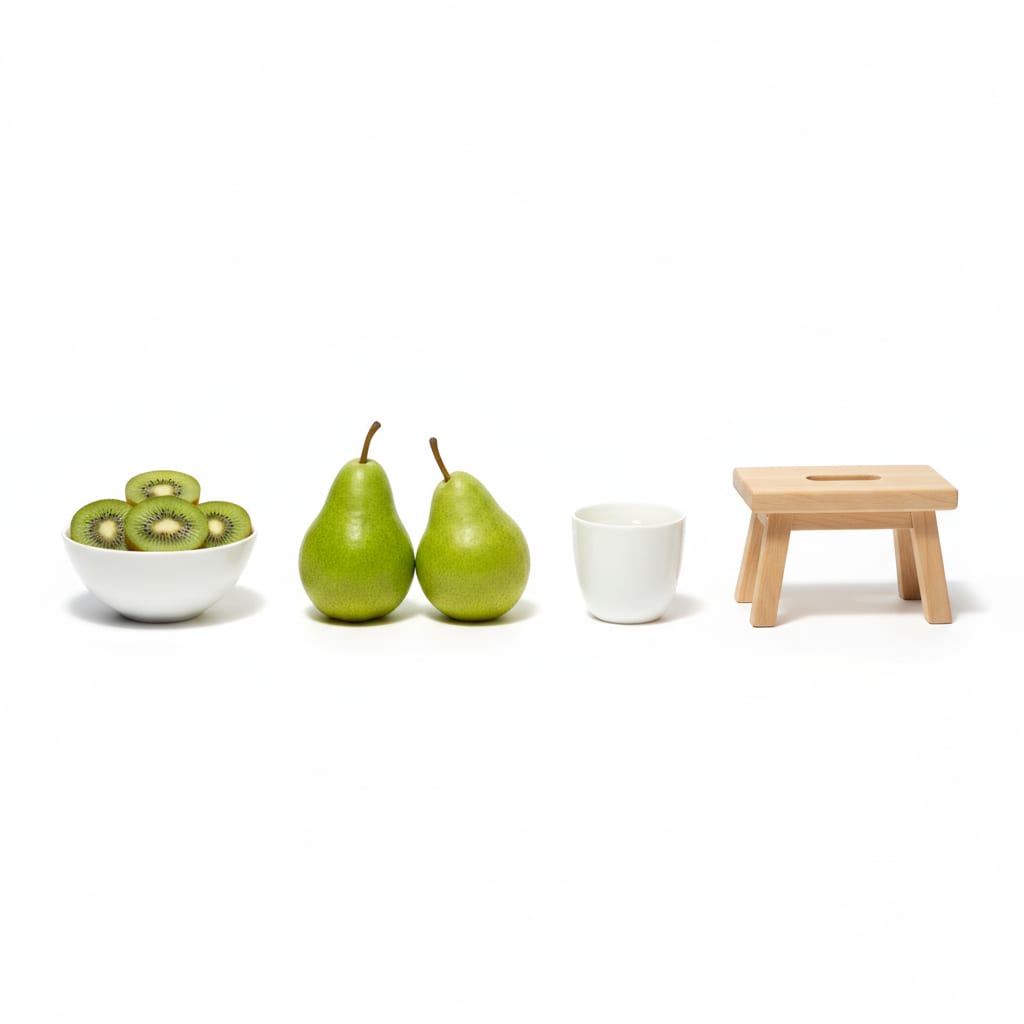
- Fruit and vegetables at every meal. The AAP says that if a child is “eating at least 5 servings of fruits and vegetables each day along with other foods that are good sources of fiber, there is really no need to count fiber grams.” KidsHealth suggests apples, pears, beans, oatmeal, oranges and ripe bananas. The AAP names kiwi too.
- Water through the day. Offer it with meals and between them. The AAP adds a useful caution: drinking more water on its own “is not an effective treatment for constipation”. It supports a softer stool; it does not fix a hard one.
- Small amounts of 100% fruit juice. KidsHealth says these “can help kids poop” and can be used for toddlers. Keep it small and check with your pediatrician before relying on it.
- Movement and regular meals. KidsHealth notes that physical activity “helps the bowels get into action” and that eating stimulates the bowels, so active play and predictable mealtimes both help.
- A calm, unhurried sit. For a child who is already using the potty or toilet, a few minutes’ sit after a meal, with no pressure to produce anything, gives the body a regular chance. On a big toilet, feet should rest flat. The AAP describes a potty stool as one way to improve toilet posture. A sturdy step such as the BabyBjörn Step Stool does that job.
Medicine is a pediatrician decision. The AAP describes several treatments and recommends that you “discuss any treatments with your child’s doctor before starting.” KidsHealth says the same about over-the-counter products. If your toddler needs something more than food and routine, your pediatrician will tell you what and how much.
For a child under one, the causes and fixes differ, especially around starting solids. Betteroo covers the younger version of this question separately.
Field note: in my toddler rooms, the children who held on were nearly always the ones who had had one bad, painful poop at some point. They were protecting themselves from a pain they remembered, and once a parent saw it that way the pressure came off and the cycle usually eased.
When to call the pediatrician
Call the doctor’s office the same day if your toddler has constipation along with:
- belly pain that is severe or keeps getting worse
- a swollen or hard belly
- vomiting
- fever
- more than a small streak of blood, or blood in the poop itself
- a child who seems unwell, floppy or unusually sleepy
Book a visit if constipation keeps coming back, or lasts more than a couple of weeks. KidsHealth advises talking to your doctor “if your child continues to have problems or if the constipation lasts for two to three weeks.” Also mention it if your toddler is soiling between poops, or is so afraid of pooping that toilet training has stalled.
Constipation is also a common cause of tummy aches. Our tummy ache at bedtime entry helps you tell constipation from the other usual reasons.
FAQ: toddler constipation
How many times a day should a toddler poop?
It varies. The AAP notes that some children poop once a day and others after every meal. What matters most is that the poop is soft and easy to pass.
Can too much milk cause constipation in toddlers?
Milk can crowd out fruit, vegetables and water if a toddler drinks a lot of it, and KidsHealth links cheese-heavy, low-fiber diets to constipation. If your child drinks much more than the suggested amount for their age, ask your pediatrician about cutting back.
What can I give my toddler for constipation?
Start with fruit, vegetables, water and a calm routine. Check with your pediatrician before giving any medicine or over-the-counter product.